English
 Español
 tiếng việt
 русский
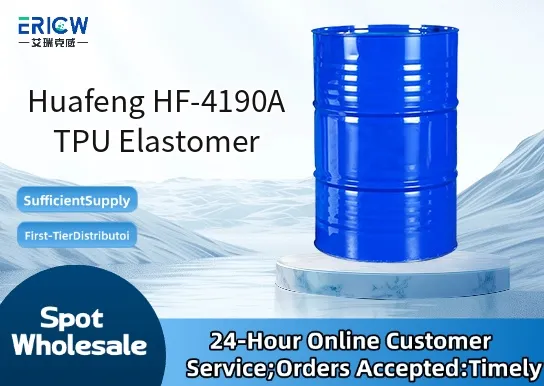
Excellent abrasion resistance for extended service life in demanding mechanical environments.
High tensile strength and elongation at break, ensuring superior toughness and flexibility.
Outstanding oil, grease, and hydrocarbon resistance suitable for industrial fluid-contact applications.
Good low-temperature flexibility down to –30 °C without significant loss of elasticity.
Compatible with common thermoplastic processing methods including extrusion, injection molding, and blow molding.
Automotive interior trim components such as instrument panel skins and door armrests.
Industrial hoses and pneumatic tubing requiring chemical resistance and pressure resilience.
Wear-resistant conveyor belts and scraper blades for material handling systems.
High-performance footwear midsoles and outsoles demanding rebound and durability.
Medical device tubing and non-implantable components where biocompatibility and clarity are advantageous.
| Chemical Type | Aliphatic polyester-based thermoplastic polyurethane |
| Product Form | Pellets |
| Appearance | Translucent ivory granules |
| Primary Applications | Extrusion profiles, molded parts, flexible tubing, and wear-resistant components |
| Key Features | Abrasion resistance, oil resistance, low-temperature flexibility, processability |
| Benefits | Reduced part replacement frequency, compatibility with standard TPU processing equipment, consistent melt stability |
| Density (g/cm³) | 1.18–1.22 |
| Melt Flow Index (230 °C/2.16 kg, g/10 min) | 10–14 |
Q1: What are the primary processing methods suitable for HF-4190A?
A: HF-4190A is designed for melt-processing techniques including extrusion, injection molding, and blow molding. Its balanced melt viscosity and thermal stability support consistent flow and good surface finish across these methods.
Q2: How does HF-4190A perform in applications requiring abrasion resistance and flexibility?
A: As a polyester-based TPU elastomer, HF-4190A delivers excellent resistance to wear, scuffing, and repeated flexing—making it well-suited for dynamic components such as seals, gaskets, and protective overmolds where mechanical durability is critical.
Q3: Is HF-4190A compatible with common engineering thermoplastics for co-extrusion or multi-material molding?
A: HF-4190A exhibits good interfacial adhesion with substrates like ABS, PC, and certain polyesters when processed under optimized temperature and dwell time conditions. Adhesion performance should be validated within the specific part geometry and process window.
Q4: What drying requirements should be followed before processing HF-4190A?
A: Like most hygroscopic TPUs, HF-4190A must be thoroughly dried prior to processing. A standard recommendation is 3–4 hours at 80–90 °C using a desiccant dryer, with moisture content maintained below 0.05% to prevent surface defects and molecular degradation.
Contact With Us:
E-mail: wangxingqiang@ericwchem.com
Have a Questions? Call Us:
Add:
Building A1, Jiete Industrial Park, Huangpu District, Guangzhou City, Guangdong Province, China