English
 Español
 tiếng việt
 русский
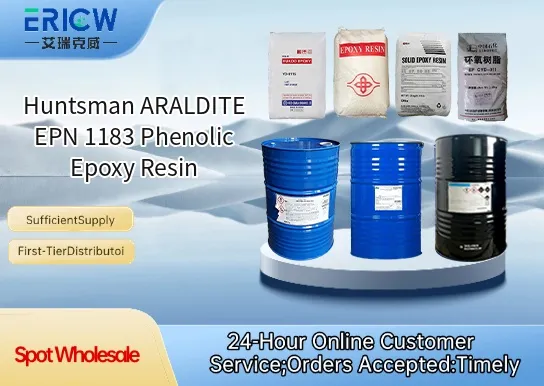
Highly reactive phenolic epoxy resin with superior thermal stability and char yield.
Excellent chemical resistance, particularly to strong acids, alkalis, and solvents at elevated temperatures.
Low viscosity in molten state, enabling good processability for casting, impregnation, and molding applications.
Provides outstanding adhesion to carbon, glass, and ceramic reinforcements in high-performance composites.
Designed for use with conventional amine or anhydride hardeners to achieve high glass transition temperatures (Tg > 200 °C).
Aerospace composite components requiring flame, smoke, and toxicity (FST) compliance.
High-temperature electrical insulation systems, including busbar encapsulants and transformer housings.
Carbon-fiber-reinforced tooling matrices for autoclave and out-of-autoclave manufacturing.
Foundry core binders and refractory coatings demanding thermal shock resistance.
Structural adhesives for metal-to-metal bonding in engine and powertrain assemblies.
| Chemical Type | Novolac-type phenolic epoxy resin |
| Product Form | Pale yellow to amber solid flakes or pellets |
| Appearance | Free-flowing, crystalline solid at room temperature |
| Epoxy Equivalent Weight (EEW) | 175–185 g/eq |
| Melting Point | 85–95 °C |
| Softening Point (Ring & Ball) | 80–90 °C |
| Primary Applications | High-temp composites, electrical encapsulation, aerospace FST materials |
| Key Features | High aromatic content, low halogen, excellent char formation |
Q1: What is the primary functional advantage of ARALDITE EPN 1183 compared to standard bisphenol-A epoxy resins?
A: ARALDITE EPN 1183 is a phenolic epoxy resin featuring multiple epoxide groups per molecule, which enables higher crosslink density upon curing. This delivers superior thermal stability, enhanced chemical resistance—particularly to acids and solvents—and improved char yield in fire-retardant formulations, making it especially suitable for demanding composite and encapsulation applications.
Q2: Is ARALDITE EPN 1183 compatible with common amine-based hardeners?
A: Yes, EPN 1183 is fully compatible with aliphatic, cycloaliphatic, and aromatic amine hardeners, as well as anhydride and phenolic curing agents. Cure profiles and final properties depend on the selected hardener type and stoichiometry; aromatic amines and high-functionality phenolics are often preferred to maximize thermal performance.
Q3: How does processing viscosity affect handling and formulation design?
A: EPN 1183 exhibits higher melt viscosity than standard DGEBA resins due to its multifunctional phenolic backbone. It is typically handled above its softening point (~75–90 °C) for pumping and mixing. Formulators often blend it with reactive diluents or lower-viscosity resins to improve processability without significantly compromising thermal performance.
Q4: Can ARALDITE EPN 1183 be used in electrical encapsulation applications?
A: Yes—it is widely used in high-reliability electrical and electronic encapsulation, particularly where elevated operating temperatures, low moisture absorption, and long-term dielectric stability are required. Its high glass transition temperature and low ionic impurity content support robust performance in potting and molding compounds for power electronics and aerospace components.
Contact With Us:
E-mail: wangxingqiang@ericwchem.com
Have a Questions? Call Us:
Add:
Building A1, Jiete Industrial Park, Huangpu District, Guangzhou City, Guangdong Province, China