English
 Español
 tiếng việt
 русский
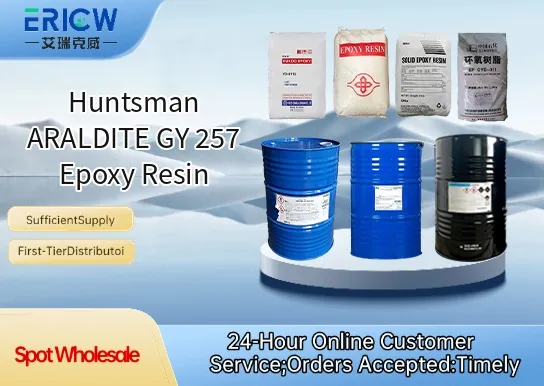
High-purity bisphenol-A based liquid epoxy resin with low chloride content.
Excellent compatibility with a broad range of curing agents, including amines and anhydrides.
Low viscosity enables easy processing, impregnation, and mixing at ambient temperature.
Superior electrical insulation properties and high dielectric strength.
Good adhesion to metals, glass, and composite substrates after proper cure.
Electrical encapsulation and potting of transformers, reactors, and insulators.
Manufacturing of high-voltage composite insulators and bushings.
Matrix resin for filament-wound pressure vessels and structural composites.
Coating systems for corrosion protection in power transmission infrastructure.
Raw material for specialty laminates used in printed circuit board (PCB) prepregs.
| Chemical Type | Bisphenol-A epoxy resin |
| Product Form | Liquid |
| Appearance | Pale yellow, clear, transparent liquid |
| Epoxy Equivalent Weight (EEW) | 185–192 g/eq |
| Viscosity at 25°C | 12,000–16,000 mPa·s |
| Chloride Content | ≤ 1,000 ppm |
| Softening Point | Not applicable (liquid at room temperature) |
| Primary Applications | Electrical insulation, composites, encapsulation |
Q1: What is the primary function of ARALDITE GY 257 in epoxy formulations?
A: ARALDITE GY 257 is a low-viscosity, liquid diglycidyl ether of bisphenol-F epoxy resin designed to serve as a reactive diluent and matrix resin. It improves processability—especially in casting, potting, and filament winding applications—while maintaining good mechanical strength, chemical resistance, and thermal stability after curing.
Q2: How does GY 257 compare to standard bisphenol-A based resins like GY 250 or GY 260?
A: Compared to bisphenol-A epoxies, GY 257 offers lower viscosity and higher reactivity due to its bisphenol-F backbone, enabling faster cure kinetics and improved wetting of fillers or reinforcements. It also delivers enhanced flexibility and reduced internal stress in thick-section castings, making it suitable for demanding structural and electrical insulation applications.
Q3: Is ARALDITE GY 257 compatible with common amine and anhydride hardeners?
A: Yes, GY 257 is fully compatible with standard aliphatic, cycloaliphatic, and aromatic amine hardeners—as well as carboxylic anhydrides—allowing formulators flexibility in tailoring cure profiles, glass transition temperature (Tg), and final performance properties for specific end-use requirements.
Q4: Can GY 257 be used in high-performance composites requiring elevated temperature resistance?
A: When properly cured with high-functionality hardeners—such as dicyandiamide or aromatic amines—GY 257 contributes to thermoset networks with good thermal stability and retention of mechanical properties at elevated service temperatures, commonly used in aerospace tooling, wind turbine blade components, and electrical encapsulation where moderate Tg enhancement is needed.
Contact With Us:
E-mail: wangxingqiang@ericwchem.com
Have a Questions? Call Us:
Add:
Building A1, Jiete Industrial Park, Huangpu District, Guangzhou City, Guangdong Province, China