English
 Español
 tiếng việt
 русский
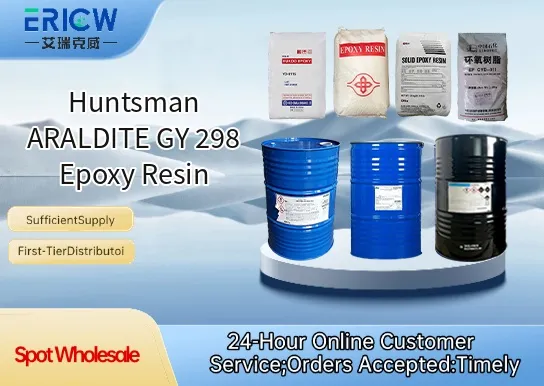
High-purity, low-chloride liquid epoxy resin for demanding electrical and electronic applications.
Excellent hydrolytic stability and resistance to moisture-induced degradation.
Low viscosity enabling superior impregnation and flow into complex geometries.
Compatible with standard amine and anhydride curing agents for flexible formulation design.
Consistent batch-to-batch performance meeting stringent quality control standards.
Electrical encapsulation of transformers, reactors, and high-voltage insulators.
Insulating varnishes and impregnating resins for rotating electrical machinery.
High-performance laminates in printed circuit board (PCB) base materials.
Structural adhesives requiring thermal stability and dielectric integrity.
| Chemical Type | Diglycidyl ether of bisphenol-A (DGEBA) |
| Product Form | Liquid |
| Appearance | Colorless to pale yellow, clear, low-viscosity liquid |
| Epoxy Equivalent Weight (EEW) | 185–192 g/eq |
| Viscosity at 25°C | 12–16 Pa·s (12,000–16,000 cP) |
| Chloride Content | ≤ 400 ppm |
| Volatiles Content | ≤ 0.3 wt% |
| Primary Applications | Electrical insulation, encapsulation, and high-reliability composites |
Q1: What is the primary function of ARALDITE GY 298 in epoxy formulations?
A: ARALDITE GY 298 is a low-viscosity, liquid diglycidyl ether of bisphenol-F (DGEBF) epoxy resin. It serves as a reactive diluent and base resin component, enabling improved processability, enhanced wetting of reinforcements, and good mechanical performance in cured systems.
Q2: How does GY 298 compare to standard DGEBA resins like ARALDITE GY 250 or GY 260?
A: GY 298 offers lower viscosity and higher reactivity than typical bisphenol-A-based resins due to its bisphenol-F backbone and flexible molecular structure. This results in faster cure kinetics under similar conditions and improved compatibility with many hardeners—especially aromatic amines—without requiring elevated processing temperatures.
Q3: Is GY 298 suitable for high-performance composite applications such as aerospace or wind energy?
A: Yes—GY 298 is widely used in structural composites where a balance of toughness, thermal resistance, and processability is required. Its low viscosity supports efficient infusion and prepreg impregnation, while its cured network delivers good glass transition temperature and dimensional stability, making it appropriate for demanding industrial laminates and tooling matrices.
Q4: Can GY 298 be blended with other epoxy resins or additives?
A: Yes—it exhibits excellent miscibility with most conventional epoxy resins (e.g., DGEBA, novolacs, cycloaliphatics) and common modifiers such as flexibilizers, flame retardants, and fillers. Compatibility should always be verified experimentally for specific formulation goals, especially when targeting regulatory compliance or long-term aging performance.
Contact With Us:
E-mail: wangxingqiang@ericwchem.com
Have a Questions? Call Us:
Add:
Building A1, Jiete Industrial Park, Huangpu District, Guangzhou City, Guangdong Province, China