English
 Español
 tiếng việt
 русский
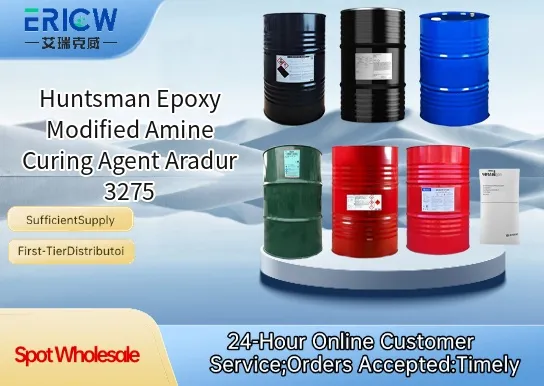
Low-viscosity liquid formulation enabling easy handling and efficient mixing with epoxy resins.
Extended pot life at ambient temperature, supporting larger batch preparation and improved processing flexibility.
Excellent adhesion to diverse substrates including concrete, steel, and composites.
Good chemical resistance post-cure, particularly against alkalis, solvents, and mild acids.
Reduced exotherm compared to conventional aliphatic amines, enhancing safety during thick-section casting.
Industrial flooring systems requiring high durability and rapid return-to-service.
Concrete repair mortars and structural strengthening composites.
Marine and offshore protective coatings for immersion service environments.
Electrical encapsulation and insulating compounds in power transmission equipment.
Adhesives and bonding agents for metal-to-metal and metal-to-composite assemblies.
| Chemical Type | Epoxy-modified polyamine |
| Product Form | Liquid |
| Appearance | Pale yellow to amber clear liquid |
| Density (25°C) | Approx. 0.98–1.02 g/cm³ |
| Viscosity (25°C) | 200–400 mPa·s |
| Amine Value | 220–260 mg KOH/g |
| Reactivity Profile | Medium-reactive, ambient-curing |
| Primary Applications | Flooring, coatings, adhesives, composites |
Q1: What is the primary function of Aradur 3275 in epoxy systems?
A: Aradur 3275 is an epoxy-modified amine curing agent designed to provide enhanced flexibility, improved adhesion to challenging substrates, and reduced sensitivity to moisture during cure—making it especially suitable for demanding industrial coatings and composite applications where toughness and reliability are critical.
Q2: How does Aradur 3275 differ from conventional aliphatic amines?
A: Unlike standard aliphatic amines, Aradur 3275 incorporates epoxy modification that lowers volatility, extends pot life, and reduces amine blush formation—while maintaining good reactivity at ambient or moderately elevated temperatures. This makes it more user-friendly in field applications and less prone to surface defects.
Q3: Is Aradur 3275 compatible with standard DGEBA-type epoxy resins?
A: Yes, Aradur 3275 is broadly compatible with diglycidyl ether of bisphenol-A (DGEBA) and other common liquid and solid epoxy resins. Compatibility and optimal performance depend on resin molecular weight, functionality, and formulation balance—so laboratory evaluation is recommended prior to full-scale use.
Q4: What are typical handling and storage recommendations for this product?
A: Aradur 3275 should be stored in tightly sealed containers under dry, cool conditions (preferably below 30 °C) and protected from moisture and prolonged exposure to air. It is hygroscopic and may absorb atmospheric water over time, which can affect reactivity and final film properties.
Contact With Us:
E-mail: wangxingqiang@ericwchem.com
Have a Questions? Call Us:
Add:
Building A1, Jiete Industrial Park, Huangpu District, Guangzhou City, Guangdong Province, China