English
 Español
 tiếng việt
 русский
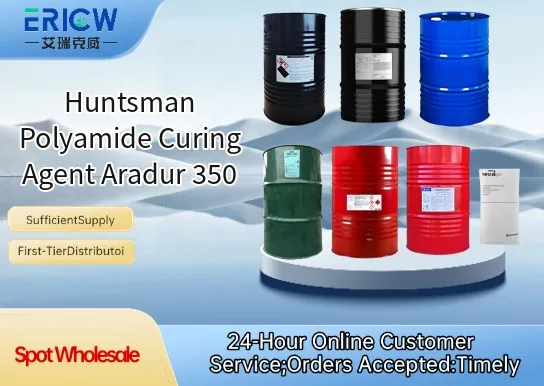
Low-viscosity polyamide curing agent enabling excellent mixing and processing with epoxy resins.
Provides balanced pot life and rapid ambient-cure performance for efficient production cycles.
Delivers superior flexibility, impact resistance, and adhesion to diverse substrates including metals and concrete.
Low odor and low amine blush tendency, supporting improved worker safety and surface aesthetics.
Compatible with standard bisphenol-A and bisphenol-F epoxy systems without requiring solvents or modifiers.
Industrial floor coatings requiring chemical resistance and mechanical durability.
Marine and offshore protective coatings for steel structures and ballast tanks.
Concrete repair mortars and bonding agents in infrastructure rehabilitation.
Electrical encapsulation and insulating varnishes for transformers and busbars.
Adhesives and composite matrix systems in wind energy and transportation sectors.
| Chemical Type | Polyamide adduct |
| Product Form | Liquid |
| Appearance | Amber to brown viscous liquid |
| Primary Applications | Epoxy coating, adhesive, and mortar systems |
| Key Features | Ambient-curing, low viscosity, low blush |
| Benefits | Improved workability, enhanced toughness, substrate versatility |
| Storage Stability | 12 months in unopened original containers at 15–25°C |
| Reactivity Profile | Medium reactivity with standard diglycidyl ether of bisphenol-A (DGEBA) |
Q1: What is the primary function of Aradur 350 in epoxy systems?
A: Aradur 350 is a polyamide-based curing agent designed to react with epoxy resins, enabling crosslinking at ambient or slightly elevated temperatures. It delivers balanced mechanical properties, good chemical resistance, and extended pot life for coating, adhesive, and composite applications.
Q2: Is Aradur 350 suitable for high-humidity or damp-surface applications?
A: Yes — as a polyamide curing agent, Aradur 350 exhibits relatively good moisture tolerance compared to many amine-based alternatives. It is commonly selected for industrial maintenance coatings applied under less-than-ideal environmental conditions, though surface preparation remains critical for optimal adhesion and performance.
Q3: How does Aradur 350 compare to conventional aliphatic polyamine curing agents in terms of handling and safety?
A: Aradur 350 offers lower volatility and reduced skin sensitization potential relative to many low-molecular-weight aliphatic amines. Its higher molecular weight and polyamide structure contribute to milder handling characteristics, though standard industrial hygiene practices—including gloves and eye protection—should always be followed during use.
Q4: Can Aradur 350 be used in food-contact or potable water applications?
A: Aradur 350 is not pre-qualified for direct food-contact or potable water applications. Formulators intending such use must conduct full regulatory evaluation—including compatibility testing and compliance verification with relevant national or regional frameworks—based on the final cured system and intended exposure conditions.
Contact With Us:
E-mail: wangxingqiang@ericwchem.com
Have a Questions? Call Us:
Add:
Building A1, Jiete Industrial Park, Huangpu District, Guangzhou City, Guangdong Province, China