English
 Español
 tiếng việt
 русский
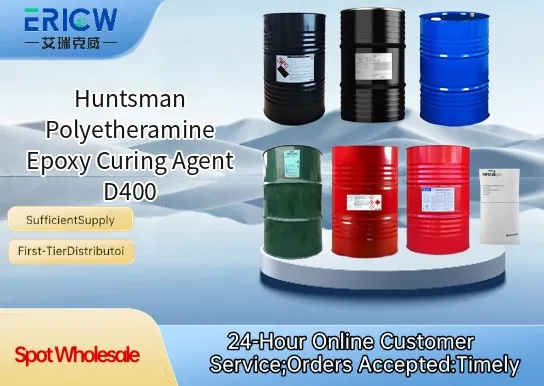
Low-viscosity polyetheramine offering excellent flow and wetting characteristics for complex substrates.
Fast-reacting aliphatic amine with reduced exotherm, enabling improved control in thick-section casting and potting.
Provides superior flexibility, impact resistance, and low-temperature toughness in cured epoxy systems.
Low volatility and minimal amine blush formation, supporting consistent surface quality and intercoat adhesion.
Compatible with standard epoxy resins (e.g., DGEBA) without need for solvents or accelerators.
High-performance structural adhesives for aerospace and transportation bonding.
Electrical potting and encapsulation compounds requiring thermal cycling stability and dielectric integrity.
Wind turbine blade bonding and repair formulations demanding fatigue resistance and environmental durability.
Marine coatings and underwater repair systems where moisture tolerance and adhesion to damp surfaces are critical.
Composite tooling and mandrel materials requiring dimensional stability and demoldability.
| Chemical Type | Aliphatic polyetheramine |
| Product Form | Liquid |
| Appearance | Pale yellow to amber clear liquid |
| Amine Value | 195–205 mg KOH/g |
| Viscosity at 25°C | 150–250 cP |
| Color (APHA) | ≤150 |
| Primary Applications | Structural adhesives, potting, composites, protective coatings |
| Key Features | Low viscosity, fast cure, flexible toughened network, low blush |
Q1: What is the primary function of D400 in epoxy systems?
A: D400 is a polyetheramine-based curing agent designed to react with epoxy resins to form flexible, tough, and chemically resistant thermoset networks—particularly valued for low-temperature cure capability and extended pot life.
Q2: How does D400 compare to traditional amine curing agents in terms of handling and safety?
A: Compared to many aliphatic or aromatic amines, D400 exhibits lower volatility and reduced skin sensitization potential, offering improved workplace handling characteristics while maintaining effective reactivity with standard epoxy resins.
Q3: Can D400 be used in high-performance coating applications requiring flexibility and impact resistance?
A: Yes—D400 is commonly selected for protective coatings, linings, and composite matrices where balanced flexibility, adhesion to diverse substrates, and resistance to thermal cycling and mechanical stress are critical performance requirements.
Q4: Is D400 compatible with common epoxy resins such as DGEBA and novolacs?
A: Yes—D400 demonstrates broad compatibility with diglycidyl ether of bisphenol-A (DGEBA), hydrogenated DGEBA, and epoxy novolacs, enabling formulation versatility across structural adhesives, composites, and industrial coatings.
Q5: What guidance is available for optimizing D400 dosage in a given formulation?
A: Dosage depends on the specific epoxy resin, desired cure profile, and end-use performance targets; it is typically adjusted based on amine hydrogen equivalent weight (AHEW) calculations and validated through small-scale cure trials under representative processing conditions.
Contact With Us:
E-mail: wangxingqiang@ericwchem.com
Have a Questions? Call Us:
Add:
Building A1, Jiete Industrial Park, Huangpu District, Guangzhou City, Guangdong Province, China