English
 Español
 tiếng việt
 русский
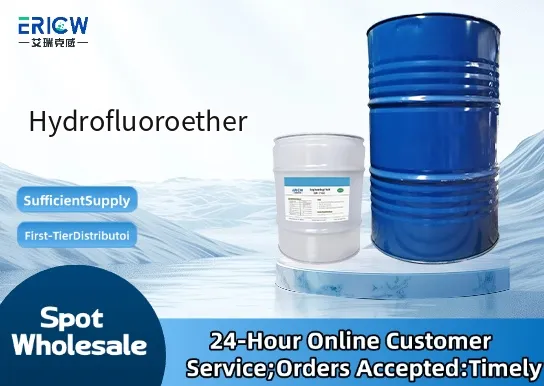
Zero ozone depletion potential (ODP = 0), fully compliant with Montreal Protocol requirements.
Low global warming potential (GWP) relative to traditional chlorofluorocarbons and hydrochlorofluorocarbons.
Chemically inert, thermally stable, and non-corrosive to common metals and engineering plastics.
Non-flammable under standard atmospheric conditions (ASTM E681 test confirmed).
Low surface tension and high volatility enable rapid, residue-free drying in precision cleaning applications.
Aerospace component cleaning — removal of fluxes, oils, and particulates from avionics and turbine assemblies.
Semiconductor manufacturing — final rinse and drying of wafers and photomasks prior to lithography.
Medical device reprocessing — low-toxicity solvent for critical cleaning of reusable surgical instruments.
Optical lens and sensor cleaning — non-streaking, non-hazing performance on coated glass and polymer substrates.
Electronic assembly degreasing — safe alternative to nPB and TCE in vapor degreasers and cold cleaning systems.
| Chemical Type | Aliphatic hydrofluoroether (HFE), e.g., HFE-7100 or HFE-7200 series |
| Product Form | Clear, colorless liquid |
| Appearance | Transparent, odorless to mild ether-like odor |
| Melting Point | −105 °C (typical) |
| Boiling Point (1 atm) | 49–61 °C (varies by specific isomer) |
| Density (20 °C) | 1.35–1.42 g/cm³ |
| Vapor Pressure (25 °C) | 15–35 kPa |
| Regulatory Compliance | REACH registered; EPA SNAP-approved for cleaning and electronics; no SARA 313 reporting required |
| Common Compatible Systems | Suitability |
| Vapor degreasers (stainless steel, aluminum-lined) | Highly Recommended – Excellent thermal and material compatibility; no degradation of seals or tanks. |
| Ultrasonic cleaning systems (with stainless steel tanks & piezoelectric transducers) | Recommended – Requires temperature control ≤ 50 °C to maintain stability. |
| Batch spray-in-air cleaning equipment | Suitable – Effective for targeted cleaning; ensure adequate ventilation per OSHA PEL guidelines. |
| Distillation recovery units (fractional, vacuum-assisted) | Highly Recommended – High purity recovery (>99.5%) achievable with standard condensers. |
Q1: What is the CAS Registry Number for common Hydrofluoroethers?
A: Key representatives include HFE-7100 (CAS 431-89-0), HFE-7200 (CAS 132158-01-5), and HFE-7300 (CAS 132158-02-6); exact CAS depends on molecular structure and isomer.
Q2: Can Hydrofluoroether be used as a direct replacement for CFC-113 or TCA in existing equipment?
A: Yes — with minor adjustments: verify seal compatibility (Viton®/FFKM recommended), recalibrate vapor degreaser temperatures due to lower boiling point, and confirm airflow rates meet ACGIH TLV® thresholds.
Q3: Does Hydrofluoroether migrate into or extract plasticizers from polymeric components?
A: No significant migration or extraction observed in validated testing with ABS, polycarbonate, PTFE, and silicone elastomers; however, prolonged exposure to unplasticized PVC or certain acrylates should be assessed case-by-case.
Q4: Is Hydrofluoroether regulated under EU F-Gas Regulation (EU) No 517/2014?
A: Yes — classified as a fluorinated greenhouse gas; however, most commercial HFEs fall below the GWP threshold (≤ 150) for mandatory leak checks and reporting in small-charge equipment (< 5 kg), subject to national implementation.
Contact With Us:
E-mail: wangxingqiang@ericwchem.com
Have a Questions? Call Us:
Add:
Building A1, Jiete Industrial Park, Huangpu District, Guangzhou City, Guangdong Province, China