English
 Español
 tiếng việt
 русский
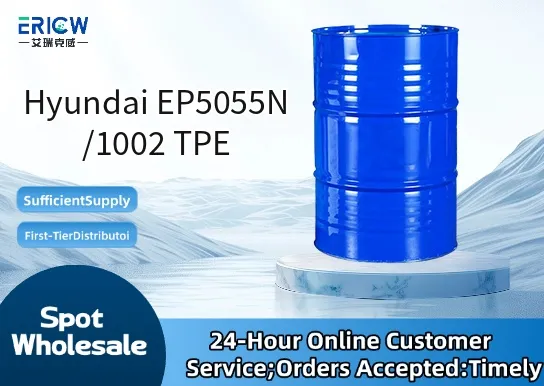
Excellent melt processability for high-speed extrusion and injection molding.
Outstanding soft-touch feel with balanced hardness (Shore A 55) and elasticity.
Good resistance to UV exposure and thermal aging, supporting outdoor durability.
Low extractables and compliant with FDA 21 CFR §177.2600 for indirect food contact applications.
Compatible with polypropylene (PP) and polyethylene (PE) substrates for co-extrusion and overmolding.
Automotive interior trim: door panels, armrests, and gear knobs.
Consumer electronics: protective cases, grips, and wearable device bands.
Household appliances: sealing gaskets, control dials, and ergonomic handles.
Medical device components: non-sterile housings, tubing connectors, and tactile interface elements.
Packaging closures and squeeze dispensers requiring flexibility and chemical resistance.
| Chemical Type | Thermoplastic Elastomer (TPE) — PP-based thermoplastic vulcanizate (TPV) |
| Product Form | Natural color pellets |
| Appearance | Off-white, free-flowing granules |
| Hardness (Shore A) | 55 ± 3 |
| Melt Flow Rate (230°C/2.16 kg) | 25–35 g/10 min |
| Density | 0.98–1.02 g/cm³ |
| Continuous Use Temperature | −40°C to +100°C |
| Key Features Summary | Soft-touch, recyclable, halogen-free, RoHS compliant |
Q1: What is the primary function of Hyundai EP5055N/1002 in thermoplastic elastomer formulations?
A: Hyundai EP5055N/1002 is a functionalized thermoplastic elastomer modifier designed to enhance melt processability, improve interfacial adhesion between dissimilar polymers, and increase toughness in TPE blends—particularly in SEBS- or TPO-based systems.
Q2: Is EP5055N/1002 compatible with common polyolefin matrices such as PP or PE?
A: Yes, EP5055N/1002 exhibits good compatibility with polypropylene (PP) and polyethylene (PE), especially when used as a compatibilizer or impact modifier in thermoplastic olefin (TPO) compounds. Its tailored molecular architecture supports dispersion and interfacial bonding without requiring additional coupling agents.
Q3: How is EP5055N/1002 typically incorporated into compound formulations?
A: It is generally introduced during twin-screw extrusion, either pre-blended with base resin or fed downstream. Dosage depends on formulation requirements but typically ranges from 0.1% to 2% by weight for optimization of mechanical balance and surface quality.
Q4: Does EP5055N/1002 require drying before processing?
A: While not highly hygroscopic, it is recommended to dry EP5055N/1002 at 60–70 °C for 2–4 hours prior to high-precision or high-temperature processing to ensure consistent melt behavior and avoid surface defects.
Contact With Us:
E-mail: wangxingqiang@ericwchem.com
Have a Questions? Call Us:
Add:
Building A1, Jiete Industrial Park, Huangpu District, Guangzhou City, Guangdong Province, China