English
 Español
 tiếng việt
 русский
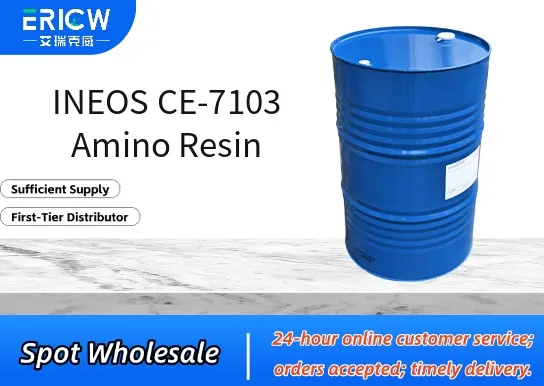
High reactivity with formaldehyde and melamine-based systems for rapid cure kinetics.
Excellent compatibility with polyester, alkyd, and acrylic resins in thermosetting coatings.
Low free formaldehyde content, supporting compliance with stringent VOC and emissions regulations.
Superior gloss retention and chemical resistance in baked enamel finishes.
Consistent batch-to-batch performance due to tightly controlled polymerization process.
Automotive OEM topcoats and refinish coatings.
Industrial coil coatings for metal roofing and appliance panels.
Powder coating formulations requiring fast-cure, high-gloss performance.
Can and container coatings for food-grade and beverage packaging.
General-purpose baking enamels for hardware and furniture substrates.
| Chemical Type | Melamine-formaldehyde resin (partially alkylated) |
| Product Form | Liquid |
| Appearance | Clear, pale yellow to amber viscous liquid |
| Non-Volatile Content (wt%) | 55–60% (as supplied) |
| Viscosity (mPa·s, 25°C) | 800–1,500 |
| Acid Number (mg KOH/g) | ≤ 5.0 |
| Free Formaldehyde (wt%) | ≤ 0.3% |
| Storage Stability | ≥ 6 months at 15–25°C in sealed container |
Q1: What is the primary function of INEOS CE-7103 in coating formulations?
A: INEOS CE-7103 is a melamine-formaldehyde based amino resin designed primarily as a crosslinking agent for thermosetting coatings. It reacts with hydroxyl- and carboxyl-functional resins (e.g., alkyds, acrylics, polyesters) under heat to form durable, chemically resistant networks with improved hardness, gloss retention, and solvent resistance.
Q2: Is CE-7103 suitable for low-bake or ambient-cure systems?
A: CE-7103 is formulated for conventional thermal curing, typically requiring bake temperatures between 120 °C and 160 °C. While it can be modified with catalysts to reduce cure temperature, it is not inherently optimized for true ambient-cure applications and generally requires elevated temperature to achieve full crosslink density and performance.
Q3: How does CE-7103 compare to other melamine resins in terms of compatibility and storage stability?
A: CE-7103 offers broad compatibility with common solvent-based and high-solids binder systems. Its balanced etherification profile provides good shelf life in formulated coatings when stored under recommended conditions (cool, dry, and away from strong acids or bases), though long-term stability should always be verified in the final formulation.
Q4: Can CE-7103 be used in waterborne systems?
A: CE-7103 is supplied as a solvent-based resin and is not inherently water-dispersible. It may be incorporated into waterborne systems using appropriate co-solvents and emulsification techniques, but compatibility, hydrolytic stability, and film formation must be carefully evaluated on a case-by-case basis.
Contact With Us:
E-mail: wangxingqiang@ericwchem.com
Have a Questions? Call Us:
Add:
Building A1, Jiete Industrial Park, Huangpu District, Guangzhou City, Guangdong Province, China