English
 Español
 tiếng việt
 русский
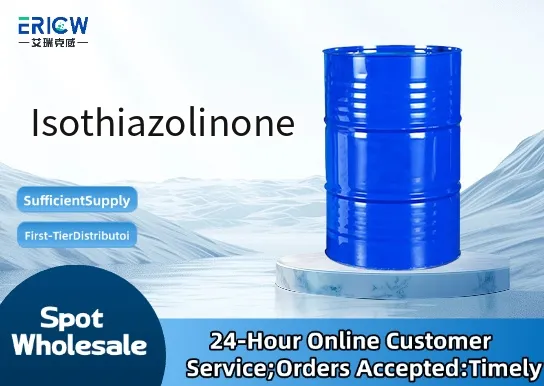
Broad-spectrum biocidal activity against bacteria, fungi, yeasts, and algae.
Effective at low dosage concentrations (typically 5–50 ppm active ingredient).
Stable across a wide pH range (pH 2–12) and compatible with common industrial water chemistries.
Rapid kill kinetics with minimal residual buildup or biofilm penetration delay.
Low volatility and non-oxidizing nature, minimizing corrosion and material compatibility concerns.
Cooling water systems in HVAC and power generation facilities.
Process water treatment for paper mills, textile dye houses, and metalworking fluid sumps.
Preservation of water-based paints, coatings, adhesives, and construction chemicals.
Emulsion polymerization reactors and latex stabilization during manufacturing.
Oilfield injection water and secondary recovery systems to control sulfate-reducing bacteria (SRB).
| Chemical Type | Heterocyclic sulfur-nitrogen biocide (e.g., 1,2-benzisothiazolin-3-one or 2-methyl-4-isothiazolin-3-one) |
| Product Form | Liquid concentrate (aqueous solution) or solid technical grade (≥95% purity) |
| Appearance | Clear, pale yellow to amber liquid or off-white crystalline powder |
| Melting Point | 67–69 °C (for pure 1,2-benzisothiazolin-3-one) |
| Primary Applications | Non-oxidizing industrial biocide for water treatment and product preservation |
| Key Features | pH-stable, fast-acting, low-foaming, non-volatile |
| Benefits | Extended product shelf life, reduced microbial fouling, lower dosing frequency vs. traditional biocides |
| Regulatory Compliance | Registered under US EPA FIFRA; compliant with EU Biocidal Products Regulation (BPR) for PT 2, PT 3, PT 6, and PT 21 uses |
| Common Compatible Systems | Suitability |
| Aqueous metalworking fluids | Highly Recommended – Excellent stability and efficacy without compromising emulsion integrity |
| Latex and acrylic polymer dispersions | Highly Recommended – Prevents spoilage during storage and processing without coagulation |
| Cooling tower water (with phosphonate/polymer scale inhibitors) | Recommended – Compatible when oxidant residuals are controlled; avoid simultaneous use with strong chlorine or bromine |
| Water-based architectural paints | Suitable – Effective preservative at 0.05–0.15% w/w; requires compatibility testing with specific pigment/binder systems |
Q1: What is the CAS number for common isothiazolinone variants?
A: Key CAS numbers include 2634-33-5 (1,2-benzisothiazolin-3-one, BIT), 2682-20-4 (2-methyl-4-isothiazolin-3-one, MIT), and 55-51-0 (5-chloro-2-methyl-4-isothiazolin-3-one, CMIT), often supplied as CMIT/MIT blends.
Q2: What is the typical effective dosage range in industrial water systems?
A: Dosage varies by system type and microbial load: 5–20 ppm for continuous feed in cooling water; 50–100 ppm for shock treatment; 0.02–0.1% w/w in preserved formulations like paints and adhesives.
Q3: How does isothiazolinone compare to formaldehyde-releasers or glutaraldehyde in terms of safety and performance?
A: Isothiazolinones offer faster initial kill and lower odor than formaldehyde-releasers, and greater pH stability than glutaraldehyde; however, they require careful handling due to potential skin sensitization — always follow GHS labeling and exposure controls.
Q4: Are isothiazolinones subject to migration or leaching in coated or embedded applications?
A: Migration is minimal in cured films or inert matrices due to low volatility and strong binding affinity; however, leaching may occur in high-humidity or aqueous-exposure conditions — formulation-specific migration testing (e.g., EN 13130) is recommended for food-contact or medical device applications.
Contact With Us:
E-mail: wangxingqiang@ericwchem.com
Have a Questions? Call Us:
Add:
Building A1, Jiete Industrial Park, Huangpu District, Guangzhou City, Guangdong Province, China