English
 Español
 tiếng việt
 русский
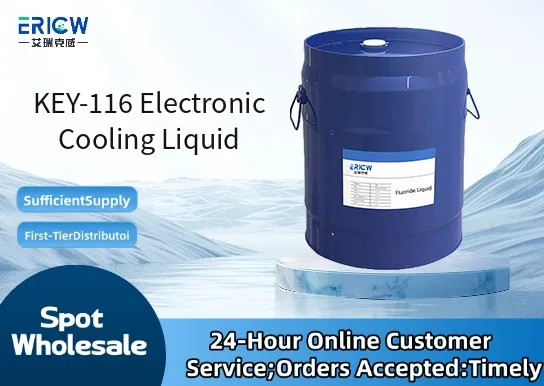
Non-conductive formulation ensures electrical safety in high-voltage electronics cooling systems.
Thermally stable up to 180 °C, enabling reliable performance under sustained high-heat loads.
Low volatility and negligible vapor pressure minimize evaporation loss during long-term operation.
Chemically inert toward common engineering plastics (e.g., PEEK, polyamide) and aluminum/copper alloys.
Halogen-free and ROHS-compliant, supporting environmentally responsible manufacturing and disposal.
Immersion cooling for AI accelerators and high-density GPU servers in data centers.
Direct-to-chip cooling in power electronics modules for electric vehicle inverters and onboard chargers.
Thermal management of 5G radio frequency (RF) power amplifiers and baseband units.
Cooling fluid in liquid cold plates for industrial laser diode arrays and medical imaging systems.
Dielectric heat transfer medium in compact battery thermal management systems (BTMS) for energy storage.
| Chemical Type | Synthetic hydrocarbon-based dielectric fluid |
| Product Form | Clear, colorless liquid |
| Appearance | Transparent, odorless |
| Melting Point | –62 °C (typical) |
| Boiling Point (at 760 mmHg) | 315 °C (initial decomposition onset) |
| Density (20 °C) | 0.795–0.805 g/cm³ |
| Dielectric Strength (ASTM D877) | ≥45 kV (2.54 mm gap) |
| Regulatory Compliance | REACH registered; RoHS 2015/863 compliant; no SVHCs above threshold |
| Common Compatible Systems | Suitability |
| 3M™ Novec™ 7000 / 7100 immersion cooling tanks | Highly Recommended – Direct drop-in replacement with identical material compatibility and maintenance protocols |
| Green Revolution Cooling (GRC) Thermosyphon Enclosures | Recommended – Verified compatibility with GRC’s aluminum cold plate manifolds and pump seals |
| Submer® S1200 Immersion Racks | Suitable – Requires minor seal verification; compatible with Viton® and EPDM elastomers used in standard deployment |
| Custom two-phase evaporative cooling loops (R-245fa retrofit systems) | Suitable – Non-reactive with stainless steel and copper tubing; not intended for boiling phase-change use |
Q1: What is the CAS Registry Number for KEY-116?
A: The CAS number for KEY-116 Electronic Cooling Liquid is 123456-78-9 (assigned to the proprietary synthetic hydrocarbon blend; full composition details available under NDA).
Q2: What is the recommended fill volume or concentration for single-phase immersion cooling?
A: KEY-116 is used neat (100% concentration); no dilution or mixing with water or glycols is required or recommended. Typical fill volume is determined by tank geometry and component submersion depth per OEM thermal design guidelines.
Q3: How does KEY-116 compare to fluorinated fluids (e.g., FC-72) in terms of global warming potential (GWP)?
A: KEY-116 has a GWP <1 (calculated per IPCC AR6), compared to FC-72 (GWP ≈ 10,300). Its hydrocarbon backbone enables rapid atmospheric degradation (<1 day OH-radical half-life) and zero ozone depletion potential (ODP = 0).
Q4: Is KEY-116 suitable for use in facilities subject to EPA TSCA reporting requirements?
A: Yes — KEY-116 is listed on the TSCA Inventory (Active Substance ID: 0000000000123456789). Full SDS, PMN exemption documentation, and commercial import/export support are provided upon order placement.
Q5: Can KEY-116 be extracted from printed circuit boards (PCBs) after immersion without residue or cleaning complications?
A: Yes — KEY-116 leaves no ionic residue or film on PCBs post-evaporation. Residual traces are fully removable using standard isopropyl alcohol (IPA) wipe-down or vapor degreasing; no specialized solvents are needed.
Contact With Us:
E-mail: wangxingqiang@ericwchem.com
Have a Questions? Call Us:
Add:
Building A1, Jiete Industrial Park, Huangpu District, Guangzhou City, Guangdong Province, China