English
 Español
 tiếng việt
 русский
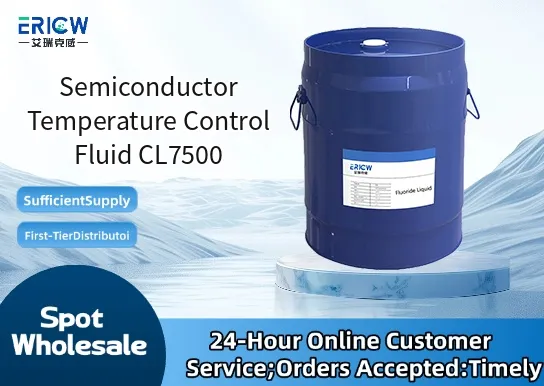
Ultra-low volatility and negligible vapor pressure at operating temperatures (−40 °C to +180 °C), minimizing fluid loss and system contamination.
Exceptional thermal stability with no measurable degradation after 1,000 hours at 150 °C under inert atmosphere.
Non-corrosive to copper, aluminum, stainless steel, and common elastomers (EPDM, FKM, silicone) used in semiconductor thermal management systems.
Halogen-free formulation compliant with IPC-J-STD-020 and JEDEC moisture sensitivity level (MSL) requirements for cleanroom environments.
Low surface tension (21.5 mN/m at 25 °C) enabling uniform wetting and efficient heat transfer across microchannel cold plates.
Temperature stabilization of high-power laser diodes and VCSEL arrays in photonic integrated circuit (PIC) test platforms.
Coolant for wafer probers and automated test equipment (ATE) thermal chucks requiring precise ±0.1 °C control.
Heat transfer medium in immersion cooling systems for advanced packaging substrates (e.g., 2.5D/3D ICs, chiplets).
Thermal interface fluid in liquid cold plate assemblies for power amplifiers and RF transceivers in 5G mmWave base stations.
Process fluid in temperature-controlled bonding and reflow simulation chambers for die attach and underfill curing validation.
| Chemical Type | Synthetic hydrocarbon-based polyalphaolefin (PAO) blend |
| Product Form | Clear, colorless liquid |
| Appearance | Transparent, water-white, odorless |
| Melting Point | −48 °C (ASTM D97) |
| Boiling Point (at 760 mmHg) | ≥320 °C (ASTM D1120, TGA onset) |
| Primary Applications | Non-contact thermal control in semiconductor manufacturing, testing, and packaging equipment |
| Key Features | Halogen-free, non-oxidizing, low outgassing (≤1.0 % TML per ASTM E595) |
| Regulatory Compliance | REACH SVHC-free; RoHS 3 (2015/863/EU) compliant; ISO 14001 & ISO 45001 aligned manufacturing |
| Common Compatible Systems | Suitability |
| Chillers with titanium or 316 stainless steel circuits (e.g., Huber Ministat, LAUDA Proline) | Highly Recommended – No material compatibility issues; validated for continuous operation up to 180 °C |
| Microchannel cold plates (copper/nickel-plated, silicon carbide substrates) | Highly Recommended – Demonstrated long-term wettability and no interfacial delamination |
| Wafer-level thermal chucks (e.g., Temptronic, Thermonics) | Recommended – Requires pre-flush with isopropyl alcohol; compatible with vacuum-sealed chuck interfaces |
| Immersion cooling tanks for substrate burn-in systems | Suitable – Non-reactive with FR-4, BT resin, and molded epoxy packages; avoid prolonged contact with uncoated polycarbonate viewports |
Q1: What is the CAS Registry Number for CL7500?
A: CL7500 is a proprietary multi-component formulation; individual components are disclosed under NDA, and the mixture does not carry a single CAS number. Full compositional disclosure is available under signed CDA for qualified engineering evaluation.
Q2: Is CL7500 suitable for direct immersion of bare silicon wafers or open-die assemblies?
A: Yes — CL7500 has been tested per SEMI F21-0302 for particle generation and metal ion leaching (<5 ppt Cu, Ni, Fe); however, post-immersion rinse with ultra-pure water is recommended before metrology or bonding steps.
Q3: How does CL7500 compare to standard silicone oils (e.g., Dow Corning 200 Fluid) in semiconductor applications?
A: Unlike silicone oils, CL7500 contains zero volatile cyclic siloxanes (D4–D6), eliminates silicone residue risk on optics/sensors, and offers superior oxidative stability above 120 °C without antioxidant depletion.
Q4: Does CL7500 meet NASA ASTM E595 low-outgassing requirements for space-grade electronics testing?
A: Yes — CL7500 achieves ≤0.8 % TML (Total Mass Loss) and ≤0.05 % CVCM (Collected Volatile Condensable Materials) at 125 °C/24h per ASTM E595, qualifying it for Class A low-outgassing applications.
Q5: Can CL7500 migrate into or extract plasticizers from PVC tubing commonly used in lab coolant loops?
A: No — CL7500 shows no measurable swelling, extraction, or plasticizer migration from medical-grade PVC (USP Class VI) or Santoprene® tubing after 1,000-hour soak at 85 °C, as confirmed by FTIR and gravimetric analysis.
Contact With Us:
E-mail: wangxingqiang@ericwchem.com
Have a Questions? Call Us:
Add:
Building A1, Jiete Industrial Park, Huangpu District, Guangzhou City, Guangdong Province, China