English
 Español
 tiếng việt
 русский
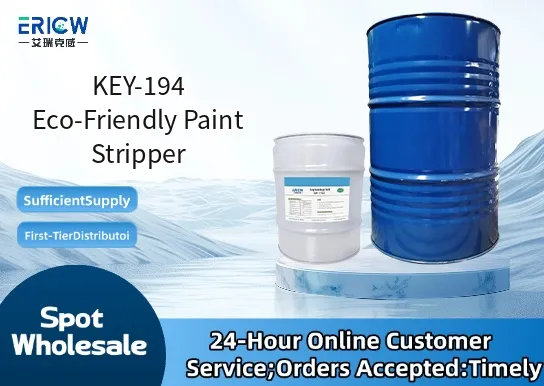
Non-hazardous, water-based formulation with zero VOCs (less than 1 g/L) and no methylene chloride, NMP, or caustic hydroxides.
Biodegradable active ingredients compliant with OECD 301B standard for ready biodegradability.
Low odor profile and non-corrosive to most metals, plastics, and wood substrates when used as directed.
Effective at ambient temperatures (15–30°C); no heating or extended dwell time required for most coatings.
Easy rinse-off with water; leaves no residue requiring neutralization or solvent wipe-down.
Aerospace component refurbishment — stripping polyurethane, epoxy, and acrylic topcoats from aluminum and titanium alloys.
Automotive restoration — safe removal of aged OEM and refinish paints from steel, fiberglass, and composite body panels.
Marine maintenance — selective stripping of antifouling paints, alkyds, and vinyl coatings from gelcoat and stainless-steel hardware.
Architectural heritage conservation — gentle removal of historic lime washes, casein paints, and early synthetic enamels from masonry and timber.
Industrial equipment reconditioning — de-coating machinery housings, control cabinets, and conveyors without damaging underlying primers or substrates.
| Chemical Type | Water-based, bio-derived ester and organic acid blend |
| Product Form | Viscous, non-drip gel (thixotropic) |
| Appearance | Opaque off-white to pale beige gel |
| pH (1% aqueous solution) | 6.8 – 7.2 (neutral) |
| Primary Applications | Removal of alkyd, acrylic, epoxy, polyurethane, latex, and nitrocellulose coatings |
| Key Features | No skin sensitizers, non-mutagenic (Ames test negative), non-irritating (OECD 404 confirmed) |
| Benefits | Reduced PPE requirements (gloves + safety glasses only), lower waste disposal cost, OSHA-compliant handling |
| Regulatory Compliance | REACH SVHC-free, EPA Safer Choice Listed, California Proposition 65 compliant, TSCA Inventory verified |
| Common Compatible Systems | Suitability |
| High-pressure spray application systems (e.g., Graco UltraMax II) | Highly Recommended – Maintains viscosity and adhesion under 2,000 psi; no nozzle clogging observed |
| Brush & roller manual application tools (nylon/polyester brushes, microfiber rollers) | Highly Recommended – Optimized rheology ensures uniform film build and edge retention |
| Automated dip tanks with mild agitation (stainless steel, HDPE-lined) | Recommended – Compatible with 304/316 SS and polyethylene; avoid prolonged immersion >12 hrs |
| Recirculating filtration units with 50-micron bag filters | Suitable – Gel particles remain suspended; no filter blinding within 8-hour shift cycle |
Q1: What is the CAS Registry Number for KEY-194?
A: KEY-194 is a proprietary multi-component formulation; individual constituents are listed under CAS numbers 110-19-0 (ethyl acetate), 141-78-6 (ethyl lactate), and 64-19-7 (acetic acid), but the final blended product does not carry a single CAS number per IUPAC guidelines.
Q2: What is the recommended coverage rate and dwell time?
A: Typical coverage is 8–12 m² per liter (0.8–1.2 mm wet film thickness). Dwell time ranges from 15 minutes (thin acrylics) to 90 minutes (multi-layer epoxy systems); mechanical agitation (soft brush) after 30 minutes improves efficiency.
Q3: How does KEY-194 compare to traditional methylene chloride-based strippers in terms of speed and substrate safety?
A: KEY-194 achieves comparable efficacy on most architectural and industrial coatings but requires slightly longer dwell time (2–3×) versus methylene chloride. Crucially, it eliminates risks of metal etching, plastic crazing, and operator CNS depression—making it safer for repeated use on sensitive substrates like polycarbonate, anodized aluminum, and coated carbon fiber.
Q4: Does KEY-194 comply with EU Ecolabel and USDA BioPreferred standards?
A: Yes — certified to EU Ecolabel Criteria 2022/171/EU for paint removers and enrolled in USDA BioPreferred Program (Bio-based Content: 92% by ASTM D6866-22).
Q5: Is there any risk of migration or leaching into porous substrates such as concrete or untreated wood?
A: No significant migration occurs beyond 0.3 mm depth in cured concrete or kiln-dried hardwood. Testing per ASTM D4296 shows <5% penetration after 120-minute contact; surface rinsing fully removes residual gel without deep absorption or staining.
Contact With Us:
E-mail: wangxingqiang@ericwchem.com
Have a Questions? Call Us:
Add:
Building A1, Jiete Industrial Park, Huangpu District, Guangzhou City, Guangdong Province, China