English
 Español
 tiếng việt
 русский
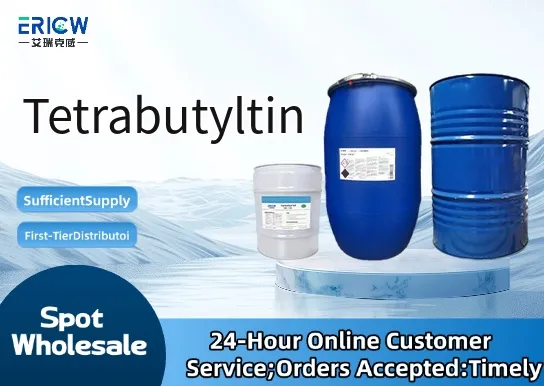
Highly effective organotin catalyst for esterification and transesterification reactions.
Thermally stable up to 200 °C, enabling use in high-temperature polymerization processes.
Low volatility compared to smaller alkyltin compounds, supporting safer handling and reduced atmospheric loss.
Excellent solubility in common organic solvents including toluene, xylene, and chlorinated hydrocarbons.
Precise stoichiometric control due to well-defined molecular structure and high purity availability.
Catalyst in the synthesis of polyesters and alkyd resins for coatings and inks.
Key reagent in the preparation of tin-based stabilizers for PVC processing.
Intermediate in the production of specialty organotin compounds for agrochemicals and biocides.
Facilitator in silicone crosslinking systems requiring delayed cure profiles.
Model compound in analytical method development for organotin residue testing (e.g., food contact materials).
| Chemical Type | Organotin compound / Tetraalkyltin |
| Product Form | Liquid (clear, colorless to pale yellow) |
| Appearance | Clear, mobile liquid with mild characteristic odor |
| Melting Point | −79 °C |
| Boiling Point | 220–225 °C at 760 mmHg |
| Density (20 °C) | 1.005–1.015 g/cm³ |
| Purity (GC) | ≥ 98.0% |
| Regulatory Compliance | REACH registered; not listed under EU Biocidal Products Regulation (BPR) Annex I for active substance status |
| Common Compatible Systems | Suitability |
| Aromatic hydrocarbon solvents (e.g., toluene, xylene) | Highly Recommended – Excellent solubility and stability |
| Chlorinated solvents (e.g., dichloromethane, chloroform) | Highly Recommended – No decomposition observed under ambient conditions |
| Polyol blends (e.g., polyester polyols) | Recommended – Effective catalytic activity; monitor for potential side reactions above 180 °C |
| Aqueous systems | Not Suitable – Hydrolytically unstable; rapid degradation to dibutyltin oxide and butanol |
Q1: What is the CAS Number for Tetrabutyltin?
A: The CAS Registry Number for Tetrabutyltin is 1461-25-2.
Q2: What is the typical recommended dosage when used as a polyesterification catalyst?
A: Standard loading ranges from 0.05 to 0.2 wt% relative to total reactants; optimal dosage depends on acid value, temperature profile, and desired reaction kinetics—validation via small-scale trials is advised.
Q3: How does Tetrabutyltin compare to Dibutyltin Dilaurate (DBTDL) in catalytic performance?
A: Tetrabutyltin offers slower initiation and more controllable cure profiles than DBTDL, with lower acute toxicity but higher thermal stability—making it preferred for high-temperature, long-cycle processes where delayed catalysis is advantageous.
Q4: Is Tetrabutyltin compliant for use in food-contact polymers?
A: Tetrabutyltin is not permitted as a direct additive in EU or FDA food-contact polymers; residual limits apply only where it is an unavoidable trace impurity (< 1 ppm) in fully reacted, purified final products meeting specific migration thresholds (e.g., EU Regulation (EC) No 10/2011).
Q5: Can Tetrabutyltin migrate from cured resins into packaged goods?
A: Migration risk is low in fully cured, crosslinked systems; however, unreacted or hydrolytically degraded tetrabutyltin may release butanol and form more mobile dibutyltin species—strict process control, post-cure thermal treatment, and compliance testing per ISO 10993-12 are strongly recommended.
Contact With Us:
E-mail: wangxingqiang@ericwchem.com
Have a Questions? Call Us:
Add:
Building A1, Jiete Industrial Park, Huangpu District, Guangzhou City, Guangdong Province, China