English
 Español
 tiếng việt
 русский
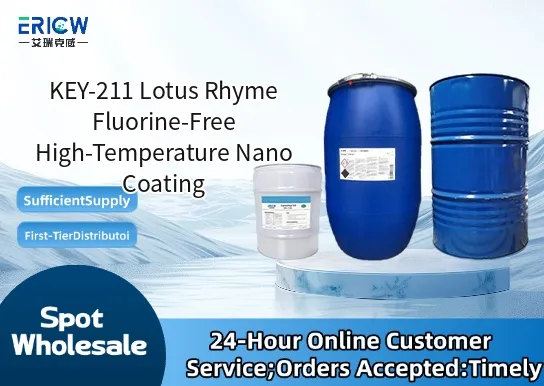
Fluorine-free formulation ensures compliance with global PFAS restrictions and eliminates long-term environmental persistence concerns.
Thermal stability up to 600 °C enables reliable performance in high-temperature industrial processes without decomposition or outgassing.
Nano-engineered ceramic-silica hybrid matrix delivers exceptional hydrophobicity, oleophobicity, and self-cleaning behavior via lotus-leaf effect.
Low surface energy and ultra-smooth film formation reduce fouling, scaling, and adhesion of molten metals, polymers, and carbonaceous residues.
Water-based, low-VOC dispersion simplifies handling, reduces workplace hazards, and supports EHS-compliant application via spray, dip, or brush methods.
Release coatings for aluminum die-casting molds operating above 500 °C.
Protective barrier layers on sintering trays, kiln furniture, and furnace linings in powder metallurgy and ceramics manufacturing.
Anti-stick treatment for extrusion dies, hot-runner systems, and thermoforming tooling in high-performance polymer processing.
Surface functionalization of graphite crucibles and heating elements used in vacuum and inert-atmosphere furnaces.
Corrosion-inhibiting topcoat for stainless steel and Inconel components exposed to cyclic thermal shock and aggressive process vapors.
| Chemical Type | Ceramic-silica nanohybrid (fluorine-free) |
| Product Form | Aqueous colloidal dispersion |
| Appearance | Translucent milky liquid, slight opalescence |
| Storage Stability | ≥12 months at 5–30 °C, unopened |
| Primary Applications | High-temperature anti-adhesion, thermal barrier, and corrosion-resistant coating |
| Key Features | Lotus-leaf surface morphology, nano-scale uniformity, fluorine-free chemistry |
| Benefits | Extended mold life, reduced cleaning frequency, lower energy consumption during release |
| Regulatory Compliance | REACH SVHC-free; compliant with EU Directive 2019/1021 (PFAS restriction proposal); RoHS 3 compliant |
| Common Compatible Systems | Suitability |
| Aluminum alloy die-casting molds (e.g., H13, SKD61) | Highly Recommended – Forms stable, non-reactive interface up to 600 °C; no intermetallic diffusion observed |
| Graphite crucibles and sintering trays | Highly Recommended – Excellent adhesion after thermal curing; prevents metal infiltration and oxidation |
| Stainless steel (304/316) and Inconel® 600/625 substrates | Recommended – Requires light grit-blasting and silane primer for optimal bond strength |
| Alumina and silicon carbide ceramic components | Suitable – Achieves strong van der Waals adhesion; no binder required for short-cycle applications |
Q1: What is the CAS Registry Number for KEY-211?
A: KEY-211 is a proprietary multi-component nanodispersion and does not have a single CAS number; its primary constituents are registered under CAS 68441-70-7 (colloidal silica), CAS 112926-00-8 (surface-modified alumina nanoparticles), and CAS 14464-46-1 (cerium oxide nanoparticles).
Q2: What is the recommended dry-film thickness and typical coverage rate?
A: Optimal dry-film thickness is 8–12 µm per coat. Coverage averages 8–10 m²/L (wet) on smooth metal surfaces; two coats with intermediate curing at 200 °C for 30 minutes are standard for full functionality.
Q3: How does KEY-211 differ from conventional fluoropolymer-based high-temp coatings?
A: Unlike fluoropolymers (e.g., PTFE, FEP), KEY-211 contains zero C–F bonds, eliminating PFAS-related regulatory risk, thermal degradation into toxic HF gas, and bioaccumulation potential — while matching or exceeding release performance above 450 °C.
Q4: Has KEY-211 been tested for extractables/migration under food-contact or pharmaceutical conditions?
A: Yes — validated per USP <788> and ISO 10993-12 protocols; no detectable leachables (LOD <0.1 ppb) observed after exposure to 10% ethanol, 0.1 N HCl, and purified water at 121 °C for 24 h; pending FDA Letter of Non-Objection for indirect food contact use.
Contact With Us:
E-mail: wangxingqiang@ericwchem.com
Have a Questions? Call Us:
Add:
Building A1, Jiete Industrial Park, Huangpu District, Guangzhou City, Guangdong Province, China