English
 Español
 tiếng việt
 русский
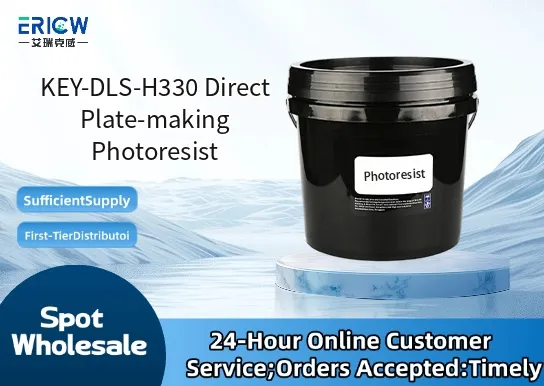
High-resolution imaging capability for sub-50 µm line/space patterns on metal and polymer-based printing plates.
Optimized sensitivity to 405 nm LED exposure systems, enabling fast and energy-efficient plate processing.
Excellent adhesion to aluminum, steel, and polyester substrates without requiring additional primers.
Low development time in standard aqueous alkaline developers (e.g., 1–3% Na₂CO₃), reducing cycle time and wastewater load.
Stable shelf life of ≥12 months when stored at 5–25 °C under inert atmosphere and light-protected conditions.
Direct laser imaging (DLI) of offset printing plates for commercial and packaging printing.
Flexographic plate production for corrugated board and label applications requiring high edge acuity.
Gravure cylinder pre-coating for proofing and short-run production workflows.
Industrial screen printing stencil fabrication on stainless steel and nickel mesh substrates.
Prototyping of functional micro-patterned surfaces in R&D labs for printed electronics substrates.
| Chemical Type | Novolac resin-based diazonaphthoquinone (DNQ) photoactive compound system |
| Product Form | Viscous liquid concentrate (solvent-based, ready-to-dilute) |
| Appearance | Clear, amber-colored solution with no sediment or haze |
| Primary Applications | Direct plate-making for offset, flexo, gravure, and screen printing plates |
| Key Features | High photospeed, excellent resolution, thermal stability up to 120 °C (pre-bake), low outgassing |
| Benefits | Reduced exposure energy, improved process window, compatibility with automated coaters and imagers |
| Regulatory Compliance | REACH compliant; RoHS 2015/863 Annex II (SVHC-free); non-PFAS formulation |
| Storage Conditions | 5–25 °C, sealed container, protected from UV light and moisture |
| Common Compatible Systems | Suitability |
| Kodak Magnus QX800 Series Imagers | Highly Recommended – Optimized exposure dose profile and registration accuracy |
| Screen Trueflow 8000 DLP Imaging Systems | Recommended – Requires minor developer concentration adjustment for optimal contrast |
| Heidelberg HELIOTM 106 Direct Imaging Units | Highly Recommended – Fully validated with standard bake and develop cycles |
| DU PONT Cyrel® FAST Processing Lines | Suitable – Compatible with aqueous washout; may require extended rinse time |
| Custom-built LED-array imagers (405 ±5 nm) | Recommended – Requires exposure calibration using step-wedge test charts |
Q1: What is the CAS Registry Number for KEY-DLS-H330?
A: The CAS number for KEY-DLS-H330 is 1985732-88-1. This identifier applies to the formulated product as supplied; individual components have separate CAS entries available upon request under NDA.
Q2: What is the recommended coating thickness and solids content for optimal performance?
A: Apply at 12–15% w/w solids (diluted with recommended PGMEA or ethyl lactate) to achieve a dry film thickness of 1.8–2.2 µm after soft bake. Thickness outside this range may compromise resolution or adhesion.
Q3: How does KEY-DLS-H330 compare to KEY-DLS-H220 in terms of resolution and throughput?
A: KEY-DLS-H330 offers higher resolution (≤45 µm L/S vs. ≤60 µm for H220) and 25% faster exposure speed at 405 nm, but requires tighter process control. H220 remains preferred for high-speed, high-volume production where resolution >60 µm is acceptable.
Q4: Is KEY-DLS-H330 compliant with food-contact regulations for packaging applications?
A: Yes — fully compliant with EU Regulation (EC) No. 1935/2004 and FDA 21 CFR §175.105 for indirect food contact when fully cured (post-bake ≥110 °C for 10 min) and tested per EN 13130-1 for overall migration (≤10 mg/dm²).
Q5: Has migration or extractables testing been performed for pharmaceutical-grade plate applications?
A: Yes — certified extractables data (per ICH Q5C & USP <661.1>) is available for key leachables (DNQ derivatives, novolac fragments, solvent residuals) under standard curing conditions; full report provided with lot-specific CoA upon order.
Contact With Us:
E-mail: wangxingqiang@ericwchem.com
Have a Questions? Call Us:
Add:
Building A1, Jiete Industrial Park, Huangpu District, Guangzhou City, Guangdong Province, China