English
 Español
 tiếng việt
 русский
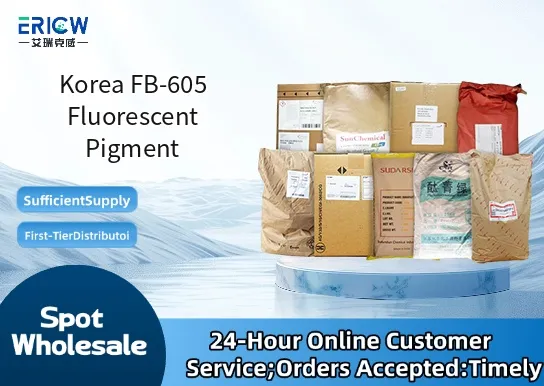
High-intensity fluorescence under UV and daylight illumination.
Excellent thermal stability up to 220°C for extrusion and compounding processes.
Good compatibility with common thermoplastics including ABS, PS, and PVC.
Low migration tendency, ensuring color consistency in end-use applications.
Non-halogenated formulation compliant with RoHS and REACH requirements.
Safety signage and emergency exit markings.
Fluorescent inks for packaging and labeling.
Automotive interior trim components requiring high-visibility accents.
Consumer electronics casings and accessories.
Toy manufacturing where vibrant, non-toxic fluorescent effects are required.
| Chemical Type | Organic fluorescent dye dispersed in polymeric carrier |
| Product Form | Free-flowing granules |
| Appearance | Yellow-orange granular solid |
| Primary Applications | Plastics coloring, ink systems, coatings |
| Key Features | UV-stable, heat-resistant, low-volatility |
| Benefits | Bright chroma, consistent dispersion, minimal filter clogging |
| Recommended Loading Range | 0.2–1.5 wt% depending on substrate and effect intensity |
| Storage Conditions | Store in cool, dry place below 30°C; protect from direct sunlight |
Q1: What types of resin systems is Korea FB-605 compatible with?
A: Korea FB-605 exhibits good compatibility with a wide range of thermoplastic and thermosetting systems, including ABS, PS, PC, PET, PMMA, and epoxy resins. It is not recommended for use in highly polar or strongly acidic media without prior compatibility testing.
Q2: How does FB-605 perform under UV exposure and outdoor weathering?
A: FB-605 delivers strong initial fluorescence and moderate UV stability. For long-term outdoor applications, it is typically used with UV stabilizers and HALS additives to help maintain brightness and reduce photodegradation. Performance varies significantly depending on matrix, thickness, and environmental conditions.
Q3: Is FB-605 suitable for food-contact or medical-grade applications?
A: Korea FB-605 is not certified for direct food-contact or implantable medical applications. Its suitability for regulated end-uses must be evaluated case-by-case by the formulator, including full regulatory review and migration testing where required.
Q4: What is the typical dosage range for optimal fluorescence effect?
A: The pigment is typically used at low concentrations — generally ranging from 0.1% to 2% by weight — depending on the desired intensity, base resin transparency, and processing method. Over-dosing may cause aggregation and reduced clarity or brightness.
Q5: Does FB-605 require special handling during compounding or injection molding?
A: Yes — due to its organic fluorescent nature, FB-605 should be processed at controlled temperatures (generally below 260°C) and minimized residence time to prevent thermal degradation. Pre-drying is recommended if moisture sensitivity is suspected, and mixing should avoid excessive shear that could damage pigment particles.
Contact With Us:
E-mail: wangxingqiang@ericwchem.com
Have a Questions? Call Us:
Add:
Building A1, Jiete Industrial Park, Huangpu District, Guangzhou City, Guangdong Province, China