English
 Español
 tiếng việt
 русский
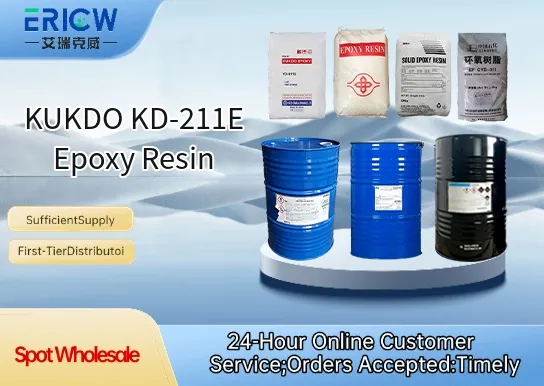
High reactivity with amine and anhydride hardeners for rapid cure at ambient or elevated temperatures.
Excellent adhesion to metals, composites, and treated plastics without primer requirement.
Low viscosity (8,000–12,000 cP at 25°C) enabling easy processing, impregnation, and void-free casting.
Superior electrical insulation properties with high dielectric strength and volume resistivity.
Good chemical resistance to dilute acids, alkalis, and aliphatic solvents after full cure.
Electrical potting and encapsulation of transformers, reactors, and high-voltage insulators.
Structural adhesive formulations for aerospace composite bonding and automotive metal-to-composite joints.
Winding impregnation resins for electric motors, generators, and stators.
High-performance casting systems for precision industrial tooling and mold making.
Base resin in flame-retardant composite laminates for rail and marine interiors.
| Chemical Type | Bisphenol-A based liquid epoxy resin |
| Product Form | Clear, low-viscosity liquid |
| Appearance | Amber to pale yellow, transparent |
| Epoxy Equivalent Weight (EEW) | 185–195 g/eq |
| Viscosity (25°C) | 8,000–12,000 cP |
| Softening Point | Not applicable (liquid at room temperature) |
| Chlorine Content | ≤ 800 ppm |
| Storage Stability | 12 months at ≤ 25°C in sealed original container |
Q1: What is the primary application of KD-211E in epoxy systems?
A: KD-211E is a liquid bisphenol-A based epoxy resin commonly used as a reactive diluent and viscosity modifier in high-performance coatings, adhesives, and electrical encapsulation compounds where improved flow, reduced shrinkage, and enhanced crosslink density are required.
Q2: How does KD-211E compare to standard DGEBA resins in terms of reactivity and handling?
A: KD-211E exhibits moderate reactivity—slightly higher than conventional low-molecular-weight DGEBA resins due to its optimized molecular weight distribution—making it suitable for both ambient-cure and thermal-cure formulations without requiring aggressive accelerators. Its low volatility and stable viscosity support safe, consistent processing under typical industrial conditions.
Q3: Is KD-211E compatible with common amine and anhydride curing agents?
A: Yes, KD-211E demonstrates broad compatibility with aliphatic and cycloaliphatic amines, polyamides, and carboxylic anhydrides. It readily participates in co-reactions within hybrid curing systems, supporting formulation flexibility for tailored pot life, cure speed, and final mechanical properties.
Q4: Can KD-211E be used in applications requiring low extractables or high purity?
A: KD-211E is manufactured under controlled conditions to minimize volatile organic content and residual monomers, making it suitable for applications where low extractables are critical—such as electronics encapsulation and industrial protective coatings—though end-use compliance should always be verified through finished-product testing.
Contact With Us:
E-mail: wangxingqiang@ericwchem.com
Have a Questions? Call Us:
Add:
Building A1, Jiete Industrial Park, Huangpu District, Guangzhou City, Guangdong Province, China