English
 Español
 tiếng việt
 русский
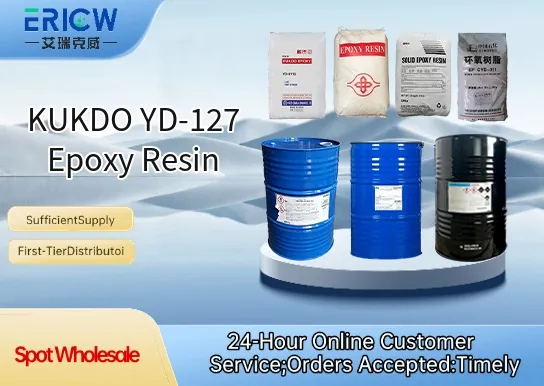
High-purity bisphenol-A based liquid epoxy resin with consistent molecular weight distribution.
Excellent compatibility with standard amine and anhydride curing agents for broad formulation flexibility.
Low viscosity (10,000–14,000 cP at 25°C) enabling easy handling, mixing, and impregnation.
Superior electrical insulation properties and thermal stability up to 130°C (UL RTI rating).
Low chloride content (<500 ppm), supporting high-reliability applications in electronics and composites.
Electrical encapsulation and potting of transformers, reactors, and power modules.
Structural adhesives for aerospace and automotive bonding where thermal and chemical resistance are critical.
Matrix resin in filament-wound composite pressure vessels and piping systems.
Laminating resin for high-performance printed circuit board (PCB) prepregs and base materials.
Coating formulations for corrosion-resistant industrial tank linings and marine infrastructure.
| Chemical Type | Bisphenol-A diglycidyl ether (DGEBA) |
| Product Form | Clear, pale yellow liquid |
| Appearance | Transparent, slightly viscous liquid without sediment or haze |
| Epoxy Equivalent Weight (EEW) | 185–192 g/eq |
| Viscosity (25°C) | 10,000–14,000 cP |
| Chloride Content | ≤ 500 ppm |
| Softening Point | 12–16°C |
| Storage Stability | ≥ 12 months at <25°C in sealed containers |
Q1: What is the primary chemical structure and functionality of YD-127?
A: YD-127 is a liquid bisphenol-A based diglycidyl ether epoxy resin with an average epoxide functionality close to 2.0. It features low viscosity and good reactivity toward common amine and anhydride curing agents, making it suitable for formulations requiring balanced processability and crosslink density.
Q2: Is YD-127 suitable for high-performance coating systems, such as industrial maintenance or marine applications?
A: Yes — YD-127 is widely used in high-solids and solvent-free epoxy coatings where excellent adhesion, chemical resistance, and mechanical durability are required. Its consistent quality and low volatility support robust film formation in demanding protective coating formulations.
Q3: How does YD-127 compare to solid epoxy resins like E-20 or E-44 in terms of processing advantages?
A: As a low-viscosity liquid resin, YD-127 eliminates the need for heating or extended mixing to achieve homogeneity, enabling easier handling at ambient temperatures and faster incorporation into multi-component systems. This improves manufacturing efficiency and reduces energy input compared to solid-grade resins.
Q4: Can YD-127 be blended with other epoxy resins or reactive diluents?
A: Yes — YD-127 is fully miscible with most standard liquid and solid epoxy resins, as well as common mono- and difunctional reactive diluents. Blending allows formulators to fine-tune viscosity, pot life, and final cured properties without phase separation under typical processing conditions.
Q5: What storage conditions are recommended to maintain YD-127’s stability and performance?
A: Store in tightly sealed containers at temperatures between 10°C and 30°C, away from direct sunlight and moisture. Prolonged exposure to elevated temperatures or humidity may lead to gradual increase in viscosity or partial crystallization; gentle warming to ~40°C with thorough mixing restores usability if crystallization occurs.
Contact With Us:
E-mail: wangxingqiang@ericwchem.com
Have a Questions? Call Us:
Add:
Building A1, Jiete Industrial Park, Huangpu District, Guangzhou City, Guangdong Province, China