English
 Español
 tiếng việt
 русский
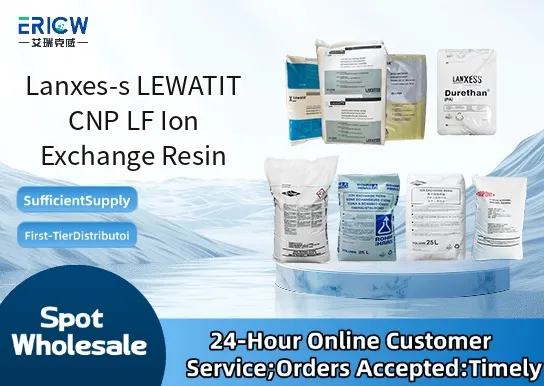
Highly selective for calcium and magnesium ions in the presence of high sodium concentrations.
Low fouling tendency due to optimized macroporous matrix and uniform bead structure.
Exceptional chemical and osmotic stability, enabling long service life in demanding softening cycles.
Low leakage performance with minimized hardness breakthrough under variable flow and load conditions.
Designed for low-pressure-drop operation in both upflow and downflow configurations.
Industrial boiler feedwater softening for power generation and process steam systems.
Pre-treatment of reverse osmosis (RO) feedwater in municipal and industrial desalination plants.
Softening of cooling tower makeup water to prevent scale formation and improve heat transfer efficiency.
Food & beverage production where consistent low-hardness water is required for product quality and equipment protection.
| Chemical Type | Strongly acidic cation exchanger, sulfonic acid functionalized polystyrene-divinylbenzene copolymer |
| Product Form | Moist, spherical beads |
| Appearance | Amber, translucent, uniform beads |
| Functional Group | –SO₃H (sulfonic acid) |
| Ionic Form | Sodium form (Na⁺) |
| Moisture Content | 45–50 % (w/w) |
| Particle Size Range | 0.315–1.25 mm (95 % retained on 0.315 mm sieve, <5 % on 1.25 mm sieve) |
| Uniformity Coefficient | ≤ 1.6 |
Q1: What is the primary functional advantage of Lanxes-s LEWATIT CNP LF compared to conventional strong acid cation exchange resins?
A: Lanxes-s LEWATIT CNP LF features a specially engineered low-fouling matrix and optimized crosslinking, which significantly enhances resistance to organic fouling and improves long-term performance stability in challenging feedwaters containing natural organic matter, iron, or manganese.
Q2: Is Lanxes-s LEWATIT CNP LF suitable for use in pharmaceutical or food-grade water purification systems?
A: Yes — it is designed for high-purity water applications and complies with global regulatory expectations for ion exchange resins used in pharmaceutical and food processing water treatment, including adherence to relevant pharmacopoeial general chapters on ion exchange materials.
Q3: How does the LF (Low Fouling) designation translate into operational benefits during service cycles?
A: The LF designation reflects improved hydraulic stability and reduced irreversible adsorption of colloidal and macromolecular contaminants, resulting in more consistent pressure drop profiles, extended run lengths between regenerations, and more predictable regeneration efficiency over time.
Q4: Can Lanxes-s LEWATIT CNP LF be used in mixed-bed configurations with standard anion exchange resins?
A: Yes — it is fully compatible with common gel- and macroporous strong base anion resins in mixed-bed systems for ultrapure water production, provided standard resin separation protocols and appropriate backwash conditions are followed.
Contact With Us:
E-mail: wangxingqiang@ericwchem.com
Have a Questions? Call Us:
Add:
Building A1, Jiete Industrial Park, Huangpu District, Guangzhou City, Guangdong Province, China