English
 Español
 tiếng việt
 русский
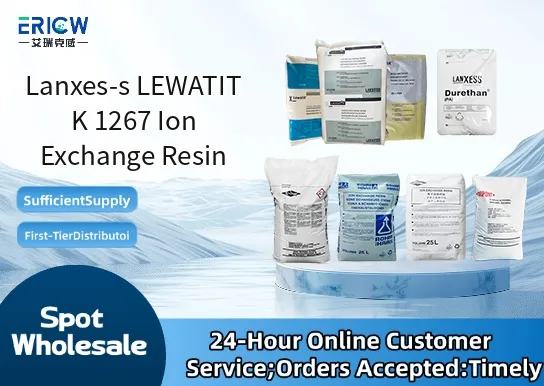
Highly selective for monovalent anions (e.g., chloride, nitrate) in the presence of sulfate and carbonate.
Optimized macroporous matrix ensures excellent kinetic performance and resistance to fouling in complex feedwaters.
Superior chemical and thermal stability, suitable for continuous operation across wide pH (0–14) and temperature ranges (up to 60 °C).
Low operating pressure drop and high bed integrity, enabling efficient column design and long service cycles.
Regenerable with standard NaCl brine, minimizing operational cost and waste stream burden.
Removal of nitrate from drinking water and municipal potable water supplies.
Chloride reduction in pharmaceutical process water and ultrapure water (UPW) pretreatment loops.
Selective anion polishing in food & beverage production, especially for low-sulfate beverage water.
Industrial wastewater treatment targeting regulated anions prior to discharge or reuse.
Pre-treatment for reverse osmosis (RO) systems to protect membranes from competitive anion scaling.
| Chemical Type | Strongly basic, type I quaternary ammonium anion exchange resin |
| Product Form | Moist, spherical beads |
| Appearance | Off-white to light yellow, uniform macroreticular beads |
| Functional Group | –N(CH₃)₃Cl⁻ |
| Ionic Form | Chloride form (Cl⁻) |
| Moisture Content | 48–53% (as shipped) |
| Particle Size Range | 0.3–1.2 mm (≥95% retained on 0.3 mm sieve) |
| Uniformity Coefficient | ≤1.6 |
Q1: What is the primary functional group and ionic form of LEWATIT K 1267?
A: LEWATIT K 1267 is a strongly basic anion exchange resin with quaternary ammonium functional groups, supplied in the chloride (Cl⁻) ionic form.
Q2: In which types of water treatment applications is this resin most commonly used?
A: It is widely applied in demineralization systems, nitrate removal from drinking water, and polishing steps in high-purity water production—especially where consistent low-conductivity effluent and high selectivity for multivalent anions are required.
Q3: How does LEWATIT K 1267 differ from conventional gel-type strong base anion resins?
A: K 1267 features a macroporous polyacrylate matrix, offering superior physical stability, faster kinetics for large or weakly ionized molecules, and enhanced resistance to organic fouling compared to standard gel-type resins.
Q4: Can this resin be regenerated, and what are typical regeneration conditions?
A: Yes, it is fully regenerable using sodium chloride (NaCl) solutions. Regeneration efficiency depends on concentration, flow rate, and contact time—standard practice involves 5–10% NaCl at controlled linear velocities and sufficient bed volume throughput.
Contact With Us:
E-mail: wangxingqiang@ericwchem.com
Have a Questions? Call Us:
Add:
Building A1, Jiete Industrial Park, Huangpu District, Guangzhou City, Guangdong Province, China