English
 Español
 tiếng việt
 русский
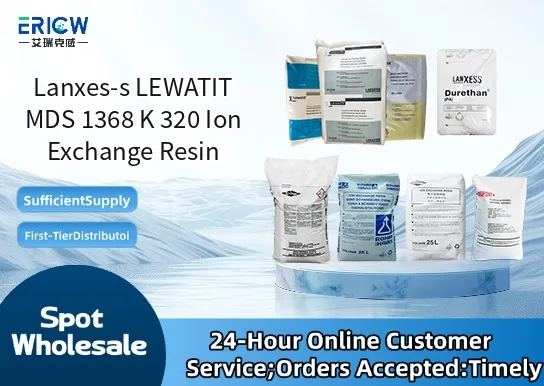
Highly stable macroporous acrylic matrix designed for robust performance in demanding industrial water treatment environments.
Optimized for selective removal of multivalent cations including calcium, magnesium, and heavy metals from complex feed streams.
Excellent chemical resistance to oxidants, acids, and alkalis—enabling reliable operation across wide pH and temperature ranges.
Consistent spherical bead morphology ensures low pressure drop and uniform flow distribution in fixed-bed columns.
Low fines generation and high mechanical strength support extended service life and reduced backwash frequency.
Ultrapure water (UPW) polishing in semiconductor manufacturing and pharmaceutical production.
Pre-treatment for reverse osmosis (RO) systems to prevent scaling and membrane fouling.
Heavy metal recovery and wastewater remediation in electroplating and metal finishing industries.
Softening and demineralization of process water in power generation and boiler feed applications.
Removal of hardness ions and trace contaminants from beverage and food-grade process water.
| Chemical Type | Macroporous acrylic cation exchange resin |
| Product Form | Moist, spherical beads |
| Appearance | Opaque amber to light brown beads |
| Functional Group | Sulfonic acid (–SO₃H) |
| Ion Form | H⁺ form (ready-to-use) |
| Particle Size Range | 0.45 – 0.75 mm |
| Moisture Content | 45 – 55% (w/w) |
| Maximum Operating Temperature | 100 °C |
Q1: What is the primary functional group and ionic form of LEWATIT MDS 1368 K 320?
A: LEWATIT MDS 1368 K 320 is a strongly acidic cation exchange resin in the potassium (K⁺) form, featuring sulfonic acid functional groups grafted onto a macroporous polystyrene-divinylbenzene matrix.
Q2: Is this resin suitable for food-grade or pharmaceutical water polishing applications?
A: Yes — LEWATIT MDS 1368 K 320 is designed for high-purity water treatment and is commonly used in final polishing stages for pharmaceutical, biotech, and food & beverage applications where low leachables and high chemical stability are required. It complies with relevant global regulatory expectations for indirect food contact and pharmaceutical water systems when validated per application-specific protocols.
Q3: How does the macroporous structure benefit performance in challenging feed waters?
A: The macroporous architecture provides enhanced resistance to fouling from organic matter, colloids, or suspended solids, and maintains consistent ion exchange kinetics even under variable pH or temperature conditions — making it particularly robust for pretreated wastewater, industrial process streams, or low-quality influents.
Q4: Can this resin be regenerated, and what are typical regeneration agents?
A: Yes — LEWATIT MDS 1368 K 320 is fully regenerable using standard strong acid solutions such as hydrochloric acid (HCl) or sulfuric acid (H₂SO₄). Regeneration efficiency and cycle life depend on operating conditions, but the resin demonstrates excellent stability across multiple regeneration cycles under recommended protocols.
Contact With Us:
E-mail: wangxingqiang@ericwchem.com
Have a Questions? Call Us:
Add:
Building A1, Jiete Industrial Park, Huangpu District, Guangzhou City, Guangdong Province, China