English
 Español
 tiếng việt
 русский
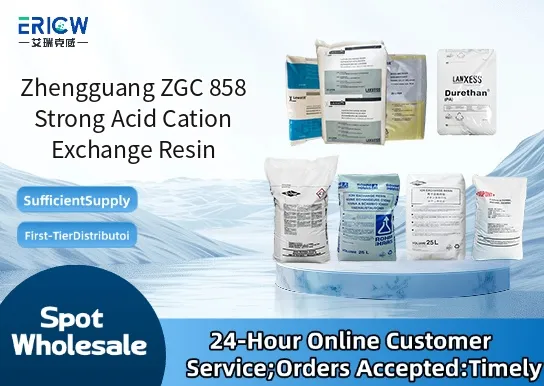
Highly cross-linked polystyrene-divinylbenzene matrix ensures exceptional mechanical strength and abrasion resistance.
Sulfonic acid functional groups provide strong cation exchange capacity and excellent regeneration efficiency.
Uniform spherical bead morphology enables low pressure drop and consistent hydraulic performance in column operation.
Optimized particle size distribution (0.4–1.2 mm) supports rapid kinetics and high throughput in industrial-scale systems.
Chemically stable across wide pH range (0–14) and tolerant to oxidizing agents commonly encountered in pretreatment processes.
Deminerlization and softening of boiler feed water in power generation plants.
Purification of process water for pharmaceutical manufacturing and biotechnology applications.
Recovery and concentration of metal ions (e.g., Ni²⁺, Cu²⁺, Co²⁺) in hydrometallurgical leach solutions.
Catalytic support in esterification and hydrolysis reactions requiring acidic solid-phase catalysts.
Pre-treatment of wastewater streams containing heavy metals prior to discharge or reuse.
| Chemical Type | Strong acid cation exchange resin, sulfonated polystyrene-divinylbenzene |
| Product Form | Moist, spherical beads |
| Appearance | Amber to light brown, translucent beads |
| Functional Group | Sulfonic acid (–SO₃H) |
| Ion Form | H⁺ form (ready-to-use) |
| Moisture Content | 45–50% (w/w) |
| Particle Size Range | 0.4–1.2 mm (≥95% retained on 0.3 mm sieve) |
| Maximum Operating Temperature | 120 °C |
Q1: What is the primary functional group and matrix structure of ZGC 858?
A: Zhengguang ZGC 858 is a gel-type, crosslinked polystyrene-divinylbenzene (PS-DVB) resin with sulfonic acid (–SO₃H) functional groups, providing strong acidity and high cation exchange capacity under both acidic and neutral conditions.
Q2: In which industrial water treatment applications is ZGC 858 commonly deployed?
A: It is widely used in demineralization systems, softening of process water, condensate polishing in power plants, and pretreatment for reverse osmosis—particularly where high total exchange capacity and reliable regeneration performance are required.
Q3: How does ZGC 858 perform during regeneration with sodium chloride or sulfuric acid?
A: The resin exhibits good regenerability with both NaCl and H₂SO₄ solutions, maintaining consistent capacity over multiple cycles; its uniform bead structure supports low pressure drop and minimizes fragmentation during repeated backwashing and chemical regeneration.
Q4: Is ZGC 858 suitable for use in food-grade or pharmaceutical water purification systems?
A: While ZGC 858 meets general industrial purity requirements, its suitability for direct contact with food or pharmaceutical process water depends on end-user validation and compliance with applicable local regulatory and quality system requirements; users should conduct compatibility and extractables testing as part of their qualification process.
Contact With Us:
E-mail: wangxingqiang@ericwchem.com
Have a Questions? Call Us:
Add:
Building A1, Jiete Industrial Park, Huangpu District, Guangzhou City, Guangdong Province, China