English
 Español
 tiếng việt
 русский
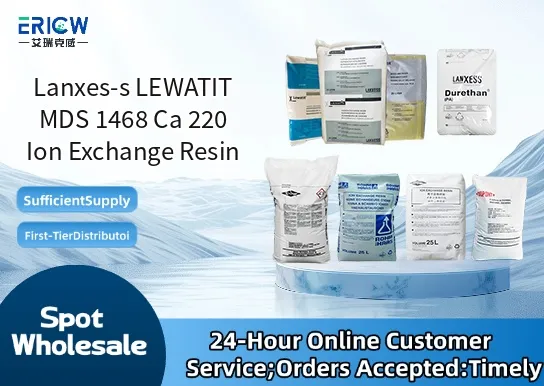
High-capacity calcium-selective strong acid cation exchange resin in Ca²⁺ form.
Optimized for low sodium leakage and stable performance in softening applications.
Excellent physical and chemical stability with high resistance to osmotic shock.
Uniform spherical bead morphology ensures low pressure drop and consistent hydraulic performance.
Compliant with global food-grade and potable water standards (e.g., NSF/ANSI 61 certified).
Domestic and commercial water softening systems.
Pretreatment for reverse osmosis and boiler feedwater systems.
Food & beverage processing where consistent calcium control is critical.
Pharmaceutical-grade water purification requiring low ionic leachables.
Industrial process water conditioning for textile, dyeing, and laundry applications.
| Chemical Type | Strong acid cation exchange resin (sulfonic acid functional group) |
| Product Form | Ca²⁺ form, ready-to-use |
| Appearance | Uniform amber, spherical beads |
| Functional Group | –SO₃H (converted to –SO₃Ca) |
| Ion Exchange Capacity (total, dry basis) | ≥ 2.0 eq/L (as Ca²⁺ form) |
| Moisture Content | 45–50 % (w/w) |
| Particle Size Range | 0.3–1.2 mm (≥95% retained between 0.3 and 1.2 mm) |
| Uniformity Coefficient | ≤ 1.6 |
Q1: What is the primary functional form of LEWATIT MDS 1468 Ca 220?
A: LEWATIT MDS 1468 Ca 220 is supplied in the calcium (Ca²⁺) form, optimized for selective removal of multivalent cations such as heavy metals, iron, and manganese from aqueous process streams.
Q2: Can this resin be used in food-grade or pharmaceutical water treatment applications?
A: LEWATIT MDS 1468 Ca 220 is designed for industrial water treatment and process purification. For use in food-contact or pharmaceutical applications, validation against relevant regulatory requirements—including material compliance and extractables testing—is required prior to implementation.
Q3: How does this resin compare to standard strong acid cation resins in terms of selectivity?
A: As a macroporous, high-capacity gel-type hybrid matrix, MDS 1468 Ca 220 offers enhanced selectivity for divalent and trivalent cations over monovalent ions—especially under low-ionic-strength conditions—making it particularly effective for polishing and trace metal removal.
Q4: What regeneration protocol is recommended?
A: Regeneration is typically performed using sodium chloride (NaCl) brine solution. The optimal concentration and dosage depend on service cycle length and contaminant loading, but common practice involves 5–10% w/w NaCl at flow rates compatible with column hydraulics and resin kinetics.
Contact With Us:
E-mail: wangxingqiang@ericwchem.com
Have a Questions? Call Us:
Add:
Building A1, Jiete Industrial Park, Huangpu District, Guangzhou City, Guangdong Province, China