English
 Español
 tiếng việt
 русский
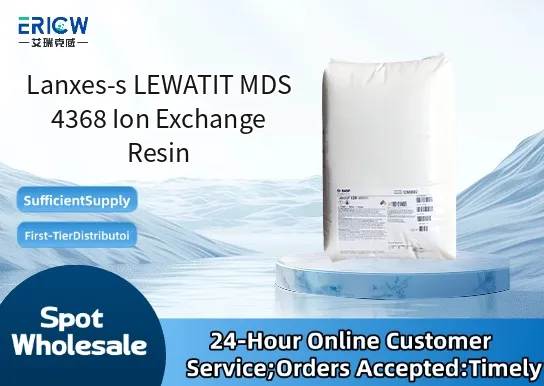
Highly stable macroporous acrylic matrix designed for exceptional chemical and mechanical durability in demanding industrial environments.
Optimized for selective removal of multivalent cations, including heavy metals such as nickel, copper, and cobalt, even at low concentrations.
Low operating pressure drop and excellent hydraulic performance due to uniform spherical bead structure and narrow particle size distribution.
Regenerable with standard acid solutions (e.g., HCl or H₂SO₄), enabling cost-effective cyclic operation and minimal waste generation.
Resistant to organic fouling and oxidative degradation, ensuring extended service life in complex feed streams containing oxidants or organics.
Heavy metal recovery and polishing in electroplating and metal finishing wastewater treatment.
Purification of process water in semiconductor manufacturing where ultralow ionic contamination is critical.
Removal of trace cations from hydrometallurgical leachates prior to solvent extraction or electrowinning.
Final polishing step in pharmaceutical-grade water systems (PW/WFI) to meet stringent USP/EP conductivity and TOC requirements.
Decolorization and metal ion reduction in specialty chemical synthesis and catalyst regeneration streams.
| Chemical Type | Macroporous acrylic chelating resin with iminodiacetic acid functional groups |
| Product Form | Moist, spherical beads |
| Appearance | Light yellow to amber, translucent beads |
| Functional Group | Iminodiacetic acid (IDA) |
| Ion Form | Sodium form (Na⁺) as supplied |
| Particle Size Range | 0.4 – 1.2 mm |
| Uniformity Coefficient | ≤ 1.6 |
| Moisture Content | 45 – 55% (w/w) |
Q1: What is the primary functional group and ion exchange capacity of LEWATIT MDS 4368?
A: LEWATIT MDS 4368 is a strongly acidic cation exchange resin with sulfonic acid functional groups. It exhibits high total exchange capacity and is optimized for selective removal of multivalent cations such as calcium, magnesium, iron, and heavy metals from aqueous process streams.
Q2: Is this resin suitable for use in pharmaceutical or food-grade water purification systems?
A: LEWATIT MDS 4368 is designed for industrial water treatment applications and complies with general regulatory requirements for ion exchange resins used in potable water and process water. For pharmaceutical or food-contact applications, end-users must verify suitability through their own validation protocols and confirm compliance with relevant local regulatory frameworks.
Q3: How does LEWATIT MDS 4368 differ from standard gel-type strong acid cation resins?
A: MDS 4368 features a macroporous matrix structure, offering superior kinetic performance, enhanced resistance to organic fouling, and improved stability under variable pH and temperature conditions compared to conventional gel-type resins. This makes it particularly effective in challenging feedwaters containing oxidants or suspended solids.
Q4: What regeneration chemicals and typical operating conditions are recommended?
A: Standard regeneration uses sodium chloride (NaCl) for softening applications or hydrochloric acid (HCl) for full cation removal. Regeneration efficiency depends on flow rate, temperature, and bed depth; optimal performance is generally achieved within standard industrial ion exchange operating ranges without requiring extreme conditions.
Contact With Us:
E-mail: wangxingqiang@ericwchem.com
Have a Questions? Call Us:
Add:
Building A1, Jiete Industrial Park, Huangpu District, Guangzhou City, Guangdong Province, China