English
 Español
 tiếng việt
 русский
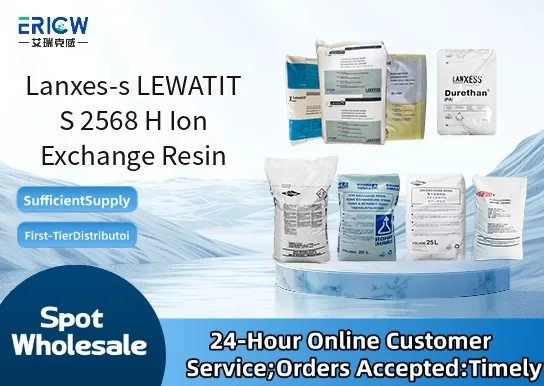
Highly stable macroporous polystyrene-divinylbenzene matrix ensures excellent mechanical strength and long service life under demanding operational conditions.
Optimized for high-efficiency removal of heavy metal cations, including Cu²⁺, Ni²⁺, Zn²⁺, and Pb²⁺, even from low-concentration wastewater streams.
Superior chemical resistance to oxidizing agents, acids, and alkalis enables reliable performance in aggressive industrial regeneration environments.
Consistent spherical bead morphology with narrow particle size distribution (0.4–1.2 mm) ensures uniform flow dynamics and minimal pressure drop in column operation.
Low soluble organic content and strict quality control meet stringent requirements for process water polishing in regulated industries.
Heavy metal recovery and removal from electroplating rinse waters.
Final polishing of ultrapure water systems in semiconductor manufacturing.
Treatment of mining effluents for compliance with environmental discharge limits.
Pre-treatment of feedwater for boiler systems to prevent scale-forming cation deposition.
Removal of trace transition metals in pharmaceutical-grade water production.
| Chemical Type | Strong acid cation exchange resin (sulfonated) |
| Product Form | Moist, hydrogen form (H⁺) |
| Appearance | Uniform amber spherical beads |
| Matrix Structure | Macroporous polystyrene-divinylbenzene copolymer |
| Particle Size Range | 0.4–1.2 mm |
| Moisture Content | 45–50 % (w/w) |
| Ion Exchange Capacity (min.) | 1.8 mmol/mL (wet volume) |
| Functional Group | Sulfonic acid (–SO₃H) |
Q1: What is the primary functional group and ionic form of LEWATIT S 2568 H?
A: LEWATIT S 2568 H is a strongly acidic cation exchange resin in the hydrogen (H⁺) form, featuring sulfonic acid functional groups grafted onto a styrene-divinylbenzene copolymer matrix.
Q2: In which types of industrial water treatment applications is this resin typically deployed?
A: It is commonly used for demineralization, softening, and polishing in high-purity water systems—especially in power generation, pharmaceutical water production, and electronics-grade water circuits—where consistent removal of multivalent cations and low sodium leakage are critical.
Q3: How does LEWATIT S 2568 H differ from standard gel-type strong acid cation resins?
A: S 2568 H is a macroporous resin with enhanced physical stability and superior kinetic performance in challenging feedwaters—such as those containing suspended solids or organic fouling potential—offering more consistent capacity retention and longer service cycles under variable operating conditions.
Q4: What regeneration protocol is recommended for optimal long-term performance?
A: Regeneration is typically carried out using dilute mineral acids (e.g., hydrochloric or sulfuric acid) at standard concentrations and flow rates. Complete regeneration requires sufficient contact time and proper backwash to remove fines and redistribute the bed, especially after extended service or exposure to high-iron feedwater.
Contact With Us:
E-mail: wangxingqiang@ericwchem.com
Have a Questions? Call Us:
Add:
Building A1, Jiete Industrial Park, Huangpu District, Guangzhou City, Guangdong Province, China