English
 Español
 tiếng việt
 русский
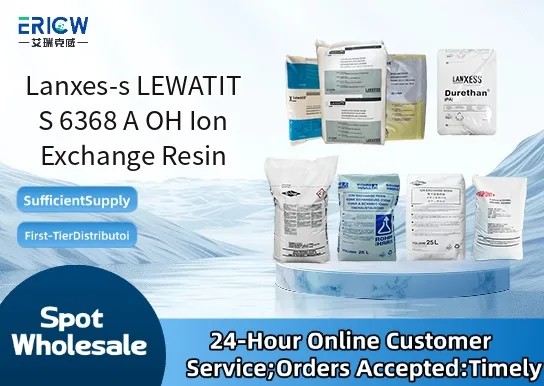
Highly stable Type I strong base anion exchange resin with trimethylamine functional groups.
Optimized for low silica leakage and excellent total anion removal in polishing applications.
Superior chemical and osmotic stability, enabling reliable performance in high-purity water systems.
Low total organic carbon (TOC) release, supporting ultrapure water (UPW) quality requirements.
Uniform spherical bead morphology ensures low pressure drop and consistent hydraulic performance.
Final polishing stage in power plant boiler feedwater treatment.
Ultrapure water production for semiconductor manufacturing facilities.
Pharmaceutical-grade water (PW/WFI) purification systems.
Electronics industry rinse water recycling and reuse circuits.
High-efficiency mixed bed configurations for critical industrial demineralization.
| Chemical Type | Type I Strong Base Anion (SBA) Resin |
| Functional Group | Trimethylamine |
| Product Form | Moist, spherical beads |
| Appearance | Off-white to light yellow, translucent beads |
| Moisture Content | 48 – 52 % (as shipped) |
| Particle Size Range | 0.4 – 1.2 mm |
| Uniformity Coefficient | ≤ 1.6 |
| Maximum Operating Temperature | 60 °C |
Q1: What is the primary functional form of LEWATIT S 6368 A OH resin?
A: LEWATIT S 6368 A OH is supplied in the hydroxide (OH⁻) ionic form and is a strongly basic anion exchange resin with a macroporous polystyrene-divinylbenzene matrix and quaternary ammonium functional groups. It is specifically designed for efficient deionization and selective anion removal in demanding applications.
Q2: Can this resin be used for polishing ultrapure water in semiconductor or pharmaceutical systems?
A: Yes — due to its high chemical stability, low extractables profile, and excellent kinetic performance in the OH⁻ form, LEWATIT S 6368 A OH is commonly selected for final polishing stages in ultrapure water systems where stringent conductivity and silica removal requirements apply.
Q3: How does temperature affect the performance and service life of this resin?
A: Performance remains stable across typical operating temperatures (5–40 °C). Prolonged exposure above 45 °C may accelerate functional group degradation and reduce operational lifespan; therefore, thermal management is recommended in high-temperature feed streams.
Q4: Is regeneration required, and what are the typical regenerants?
A: Yes — like all ion exchange resins, LEWATIT S 6368 A OH requires periodic regeneration after exhaustion. Sodium hydroxide (NaOH) solution is the standard regenerant, with concentration and dosage adjusted based on loading history and desired regeneration efficiency.
Contact With Us:
E-mail: wangxingqiang@ericwchem.com
Have a Questions? Call Us:
Add:
Building A1, Jiete Industrial Park, Huangpu District, Guangzhou City, Guangdong Province, China