English
 Español
 tiếng việt
 русский
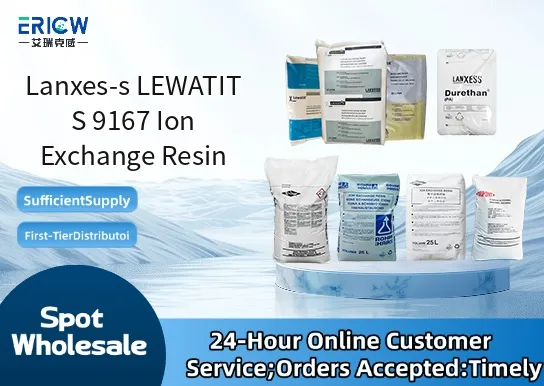
High-capacity macroporous strong acid cation exchanger based on sulfonated polystyrene-divinylbenzene matrix.
Exceptional chemical and osmotic stability, suitable for demanding industrial regeneration cycles and high-ionic-strength feed streams.
Optimized kinetic performance with low pressure drop, enabling efficient operation in both fixed-bed and moving-bed systems.
Consistent spherical bead morphology and narrow particle size distribution (0.3–1.2 mm) for uniform flow and reduced channeling.
Compliant with global food-contact and potable water standards (e.g., NSF/ANSI 61, EU Regulation (EC) No. 1935/2004).
Ultrapure water production for semiconductor manufacturing and pharmaceutical water-for-injection (WFI) systems.
Pre-treatment of boiler feedwater in high-pressure thermal power plants to prevent scale and corrosion.
Hardness removal and softening in municipal and industrial drinking water treatment facilities.
Recovery and purification of metal ions (e.g., Ni²⁺, Co²⁺, Cu²⁺) in hydrometallurgical leachate processing.
Catalytic support in esterification and hydrolysis reactions requiring acid functionality under non-aqueous conditions.
| Chemical Type | Strong Acid Cation (SAC), Macroporous |
| Functional Group | Sulfonic acid (–SO₃H) |
| Product Form | Moist, sodium-form beads (ready-to-use) |
| Appearance | Opaque amber spherical beads |
| Particle Size Range | 0.3 – 1.2 mm |
| Moisture Content | 45 – 55 % (w/w) |
| Ion Exchange Capacity (Na⁺ form) | ≥ 1.8 eq/L (dry resin) |
| Maximum Operating Temperature | 120 °C |
Q1: What is the primary functional group and ionic form of LEWATIT S 9167?
A: LEWATIT S 9167 is a strongly acidic cation exchange resin based on a styrene-divinylbenzene matrix, functionalized with sulfonic acid groups. It is supplied in the sodium (Na⁺) form, enabling efficient removal of multivalent cations such as calcium and magnesium from aqueous streams.
Q2: Is LEWATIT S 9167 suitable for use in potable water treatment applications?
A: Yes — LEWATIT S 9167 is widely used in drinking water softening and demineralization systems. It complies with relevant global regulatory frameworks for indirect food contact and potable water applications when operated within validated process conditions and regenerated according to standard protocols.
Q3: How does LEWATIT S 9167 compare to gel-type cation resins in terms of kinetic performance and fouling resistance?
A: As a macroporous resin, LEWATIT S 9167 offers enhanced diffusion kinetics and superior resistance to organic fouling compared to conventional gel-type cation exchangers. Its rigid, high-surface-area structure maintains consistent performance in waters containing moderate levels of natural organic matter or suspended solids.
Q4: What regeneration chemicals and typical operating pH range are recommended for LEWATIT S 9167?
A: Sodium chloride (NaCl) is the standard regenerant for softening service. For full demineralization, hydrochloric acid (HCl) may be used to convert the resin to the hydrogen form. The resin exhibits stable performance across a broad operational pH range, typically from pH 1 to 14, though long-term exposure to extreme alkalinity should be minimized to preserve matrix integrity.
Contact With Us:
E-mail: wangxingqiang@ericwchem.com
Have a Questions? Call Us:
Add:
Building A1, Jiete Industrial Park, Huangpu District, Guangzhou City, Guangdong Province, China