English
 Español
 tiếng việt
 русский
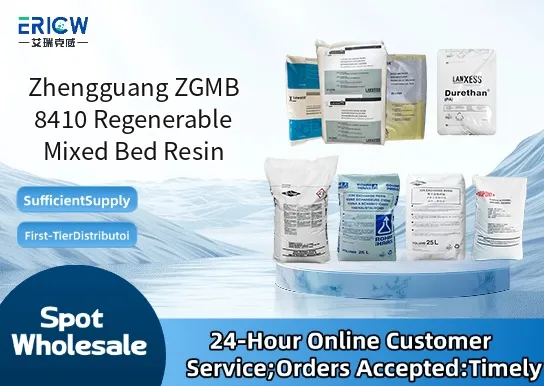
Highly regenerable cationic and anionic exchange resins pre-mixed in optimal ratio for consistent deionization performance.
Engineered for low sodium and silica leakage, delivering ultrapure water with resistivity up to 18.2 MΩ·cm after polishing.
Excellent physical stability and abrasion resistance, ensuring long service life under repeated regeneration cycles.
Low total organic carbon (TOC) extractables, minimizing contamination risk in sensitive downstream processes.
Compatible with standard mixed bed regeneration protocols using HCl and NaOH, without requiring specialized equipment.
Final polishing stage in high-purity water systems for semiconductor manufacturing.
Ultrapure water production for pharmaceutical-grade injection water (WFI) and purified water (PW) systems.
Critical feedwater treatment for high-pressure steam boilers in power generation facilities.
Lab-scale and pilot-plant deionization units requiring reproducible, low-maintenance resin performance.
Electronics cleaning rinse water systems where low ionic and particulate carryover is essential.
| Chemical Type | Strong acid cation (SAC) / strong base anion (SBA) mixed bed resin |
| Product Form | Uniform spherical beads, pre-mixed and pre-conditioned |
| Appearance | Opaque white (cation) and amber (anion) beads, visually homogeneous blend |
| Primary Applications | Polishing deionization for ultrapure water (UPW) systems |
| Key Features | Regenerable, low TOC leachables, high regeneration efficiency |
| Operating Temperature Range | 5–50 °C |
| Maximum Service Flow Rate | 30–60 m/h (depending on vessel design and water quality) |
| Regeneration Chemicals | HCl (4–6% w/w) for cation; NaOH (4–6% w/w) for anion |
Q1: What is the primary application of ZGMB 8410 in water purification systems?
A: ZGMB 8410 is specifically engineered for high-purity water production in power generation, pharmaceutical manufacturing, and microelectronics rinsing applications—where consistent removal of both cations and anions is critical to achieving ultrapure water specifications.
Q2: How does ZGMB 8410 differ from conventional mixed bed resins in terms of regeneration performance?
A: Unlike non-regenerable or single-use mixed beds, ZGMB 8410 features a robust, chemically balanced matrix that enables efficient on-site regeneration using standard acid and caustic solutions—maintaining stable ion exchange capacity and low silica leakage over multiple cycles.
Q3: Can ZGMB 8410 be used in both upflow and downflow service configurations?
A: Yes—ZGMB 8410 is formulated with uniform bead size distribution and high mechanical strength to support reliable operation in either configuration, though optimal performance is achieved when installed in dedicated mixed bed vessels designed for counter-current regeneration.
Q4: What are the key handling precautions during installation and regeneration?
A: Operators should avoid excessive agitation during loading to prevent resin segregation, ensure thorough backwashing prior to service to remove fines, and strictly follow recommended regenerant concentration, flow rate, and rinse volume guidelines to preserve resin integrity and minimize cross-contamination.
Contact With Us:
E-mail: wangxingqiang@ericwchem.com
Have a Questions? Call Us:
Add:
Building A1, Jiete Industrial Park, Huangpu District, Guangzhou City, Guangdong Province, China