English
 Español
 tiếng việt
 русский
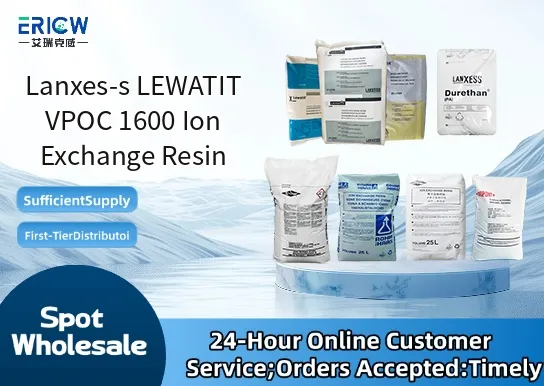
Highly stable macroporous polystyrene-divinylbenzene matrix engineered for robust performance in demanding oxidative environments.
Optimized for selective removal of organic acids and low-molecular-weight anionic impurities from process streams.
Low operating pressure drop and excellent hydraulic stability across wide flow rate ranges.
Regenerable with standard sodium hydroxide solutions, supporting sustainable cyclic operation.
Consistent bead uniformity and high mechanical strength to minimize attrition during long-term service.
Purification of pharmaceutical intermediates and active pharmaceutical ingredients (APIs).
Decolorization and organic impurity removal in food-grade sugar and sweetener production.
Polishing step in ultrapure water systems for semiconductor manufacturing.
Treatment of fermentation broths to isolate organic acids such as citric, lactic, and gluconic acid.
Removal of humic substances and anionic contaminants in specialty chemical synthesis streams.
| Chemical Type | Macroporous strong base anion exchange resin (quaternary ammonium functional group) |
| Product Form | Moist, spherical beads |
| Appearance | Off-white to light yellow, translucent beads |
| Functional Group | Triethylbenzylammonium |
| Matrix Structure | Polystyrene-divinylbenzene (macroporous) |
| Ion Form | Chloride form (Cl⁻) |
| Moisture Content | 45–55% (as shipped) |
| Particle Size Range | 0.315 – 1.25 mm (95% retained on 0.315 mm sieve) |
Q1: What is the primary functional group and base matrix of LEWATIT VPOC 1600?
A: LEWATIT VPOC 1600 is a strongly acidic cation exchange resin based on a crosslinked polystyrene matrix, functionalized with sulfonic acid groups. It is specifically designed for high-purity water treatment applications requiring low extractables and excellent chemical stability.
Q2: Is LEWATIT VPOC 1600 suitable for pharmaceutical or biotech water purification systems?
A: Yes — it is widely used in purified water (PW) and water for injection (WFI) pretreatment systems due to its low organic leachables, high regeneration efficiency, and compliance with general pharmacopeial expectations for ion exchange resins in critical water loops.
Q3: How does LEWATIT VPOC 1600 differ from standard gel-type strong acid cation resins?
A: VPOC 1600 features a specially optimized macroporous structure that enhances kinetic performance in low-ionic-strength water, improves resistance to organic fouling, and reduces pressure drop across packed beds compared to conventional gel-type resins.
Q4: What regeneration chemicals are recommended for LEWATIT VPOC 1600?
A: Sodium chloride (NaCl) is the standard regenerant for softening service; hydrochloric acid (HCl) is typically used for full cation removal and polishing applications. Regeneration concentration and flow rates should be optimized based on system design and feedwater quality.
Contact With Us:
E-mail: wangxingqiang@ericwchem.com
Have a Questions? Call Us:
Add:
Building A1, Jiete Industrial Park, Huangpu District, Guangzhou City, Guangdong Province, China