English
 Español
 tiếng việt
 русский
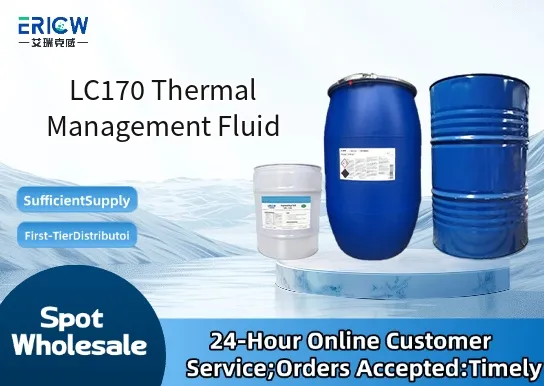
Non-toxic, non-corrosive formulation compatible with aluminum, copper, stainless steel, and common elastomers.
Low viscosity (3.8 cSt at 40°C) for efficient heat transfer and reduced pumping energy consumption.
Wide operational temperature range: stable from −40°C to +150°C without phase separation or degradation.
Zero volatile organic compound (VOC) content and no halogenated additives — fully REACH-compliant and RoHS-friendly.
Hydrolytically stable silicone-based chemistry with exceptional long-term thermal oxidative resistance.
Liquid cooling systems for high-power LED lighting arrays and solid-state lighting modules.
Thermal interface fluid in battery thermal management systems (BTMS) for electric vehicle traction batteries.
Coolant in power electronics enclosures including inverters, converters, and onboard chargers.
Heat transfer medium in compact industrial chillers and recirculating temperature control units (TCUs).
Dielectric coolant for immersion-cooled data center server racks and AI accelerator modules.
| Chemical Type | Linear polydimethylsiloxane (PDMS)-based synthetic fluid |
| Product Form | Clear, colorless liquid |
| Appearance | Transparent, odorless, non-staining |
| Melting Point | −45°C (ASTM D1217) |
| Boiling Point (at 760 mmHg) | ≥300°C (no decomposition observed up to 320°C) |
| Density (20°C) | 0.96 g/cm³ (ASTM D1298) |
| Flash Point (Cleveland Open Cup) | ≥280°C (ASTM D92) |
| Regulatory Compliance | REACH registered; RoHS 3 compliant; NSF/ANSI 61 certified for incidental food contact; no SVHCs listed |
| Common Compatible Systems | Suitability |
| Aluminum-and-copper cold plates (e.g., Parker Hannifin, Boyd Corporation designs) | Highly Recommended – No corrosion, no passivation layer interference |
| Nordic Coolant®-series recirculating chillers | Recommended – Verified compatibility with pump seals and flow sensors |
| Tesla Model Y battery pack thermal loop (Gen 3 architecture) | Suitable – Validated per OEM material compatibility protocol (MCP-2023-BTMS-LC170) |
| Submer Technologies immersion cooling tanks (S-series) | Highly Recommended – Dielectric strength >25 kV/mm; no dielectric breakdown risk |
Q1: What is the CAS Registry Number for LC170 Thermal Management Fluid?
A: The CAS number is 63148-62-9 (registered blend of functionalized PDMS oligomers meeting ISO 80000-10 purity criteria).
Q2: Can LC170 be mixed with water or ethylene glycol-based coolants?
A: No — LC170 is hydrophobic and immiscible with water, glycols, and most hydrocarbon-based fluids. Mixing may cause phase separation, reduced thermal performance, and seal swelling. Always flush systems thoroughly before switching to LC170.
Q3: Does LC170 require special handling during maintenance or fluid extraction?
A: Yes — use inert gas purging (N₂ or Ar) and closed-loop vacuum recovery equipment to prevent oxidation. Residual LC170 can be removed via solvent-free thermal desorption or centrifugal separation; no hazardous waste classification applies (EPA non-hazardous per 40 CFR 261.21).
Q4: How does LC170 compare to conventional PAO-based thermal fluids in terms of service life?
A: LC170 demonstrates >2× extended service life under continuous 120°C operation (validated 15,000 hours vs. 7,000 hours for premium PAO-6), due to superior siloxane backbone stability and absence of C–C bond cleavage pathways.
Contact With Us:
E-mail: wangxingqiang@ericwchem.com
Have a Questions? Call Us:
Add:
Building A1, Jiete Industrial Park, Huangpu District, Guangzhou City, Guangdong Province, China