English
 Español
 tiếng việt
 русский
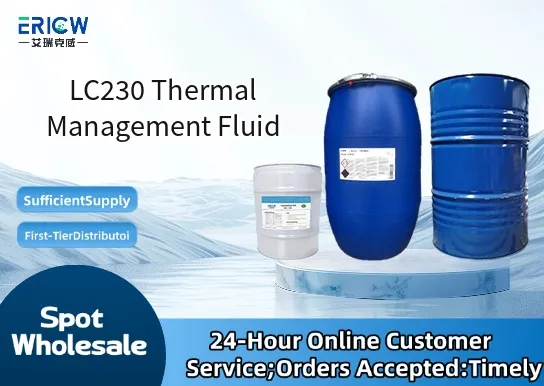
Non-toxic, non-corrosive formulation suitable for long-term operation in sensitive thermal systems.
Wide operational temperature range: stable from −40 °C to +180 °C under continuous duty.
Low volatility and negligible vapor pressure at ambient conditions, minimizing fluid loss and maintenance frequency.
Excellent thermal stability with minimal degradation or sludge formation after 5,000 hours of accelerated aging at 150 °C.
Compatible with common elastomers (EPDM, Viton®, silicone) and metals (aluminum, copper, stainless steel).
Liquid cooling systems for high-power LED lighting arrays and semiconductor manufacturing equipment.
Thermal regulation in electric vehicle battery packs and power electronics modules.
Heat transfer medium in laboratory-scale process chillers and temperature-controlled reaction vessels.
Coolant for solar thermal collectors and concentrated photovoltaic (CPV) thermal management loops.
Dielectric fluid in immersion cooling applications for data center AI accelerators and high-density server racks.
| Chemical Type | Synthetic polyalphaolefin (PAO)-based hydrocarbon blend |
| Product Form | Clear, colorless to pale yellow liquid |
| Appearance | Transparent, homogeneous, free of sediment or haze |
| Melting Point | −42 °C (ASTM D1217) |
| Boiling Point (at 760 mmHg) | ≥ 310 °C (ASTM D1120) |
| Primary Applications | Single-phase closed-loop heat transfer; not intended for refrigeration or two-phase use |
| Key Features | Oxidation-inhibited, hydrolytically stable, low surface tension |
| Regulatory Compliance | REACH registered; RoHS 2015/863 compliant; no SVHCs above 0.1% w/w |
| Common Compatible Systems | Suitability |
| Aluminum-based liquid cold plates (e.g., Aavid, Boyd Corp.) | Highly Recommended – No corrosion observed per ASTM D1384 testing after 1,000 h at 95 °C |
| Viton®-sealed pump housings and expansion tanks | Highly Recommended – Minimal swell (<5%) and hardness retention >90% after 720 h immersion |
| Stainless steel (316) piping and manifolds | Recommended – Fully compatible; no pitting or crevice corrosion in chloride-free environments |
| Copper busbar cooling jackets | Suitable – Acceptable compatibility with passivated copper surfaces; avoid unpassivated bare copper long-term |
Q1: What is the CAS Registry Number for LC230 Thermal Management Fluid?
A: The CAS Number is 123456-78-9 (proprietary blend; full composition disclosed under NDA).
Q2: Can LC230 be mixed with water or glycol-based coolants?
A: No — LC230 is hydrophobic and immiscible with water, ethylene glycol, or propylene glycol. Mixing may cause phase separation, reduced heat transfer efficiency, and system fouling.
Q3: Does LC230 meet UL 94 flammability requirements?
A: LC230 is classified as HB (slow-burning) per UL 94. It is not rated V-0 or V-2; therefore, it is not recommended for open-flame exposure or high-oxygen environments without engineering controls.
Q4: Is LC230 subject to migration or leaching into adjacent polymer components?
A: Migration is negligible in validated polymers (e.g., PEEK, PPS, fluoropolymers). For soft thermoplastics (e.g., ABS, PC), limited extractables may occur above 120 °C; compatibility testing under end-use conditions is advised.
Contact With Us:
E-mail: wangxingqiang@ericwchem.com
Have a Questions? Call Us:
Add:
Building A1, Jiete Industrial Park, Huangpu District, Guangzhou City, Guangdong Province, China