English
 Español
 tiếng việt
 русский
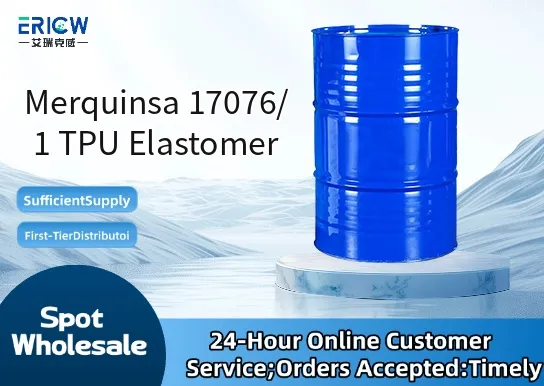
Excellent abrasion resistance for demanding mechanical service conditions.
High transparency and optical clarity suitable for aesthetic-sensitive applications.
Good low-temperature flexibility down to –30 °C without significant loss of elasticity.
Outstanding oil and grease resistance compared to conventional thermoplastic elastomers.
Processable via standard thermoplastic techniques including extrusion, injection molding, and blow molding.
Transparent protective films for electronic displays and touch panels.
Flexible tubing for medical and food-grade fluid transfer systems.
Soft-touch overmolding for automotive interior components and control interfaces.
Wear-resistant seals and gaskets in industrial hydraulic and pneumatic equipment.
High-clarity grips and ergonomic handles for consumer electronics and power tools.
| Chemical Type | Aliphatic polyester-based thermoplastic polyurethane (TPU) |
| Product Form | Pellets |
| Appearance | Translucent, natural-colored granules |
| Primary Applications | Transparent components, flexible seals, soft-touch overmolding |
| Key Features | Abrasion resistance, clarity, low-temperature flexibility, oil resistance |
| Processing Methods | Injection molding, extrusion, blow molding |
| Density (g/cm³) | 1.18–1.20 |
| Melt Flow Index (210 °C/10 kg, g/10 min) | 10–14 |
Q1: What is the primary application domain for Merquinsa 17076/1?
A: Merquinsa 17076/1 is a thermoplastic polyurethane elastomer specifically engineered for demanding extrusion and injection molding applications, with strong suitability in automotive interior components, technical hoses, and flexible industrial profiles requiring excellent abrasion resistance and low-temperature flexibility.
Q2: Is Merquinsa 17076/1 compatible with common engineering thermoplastics for blending or co-extrusion?
A: Yes, it demonstrates good compatibility with several polyolefins and certain polyester-based resins, enabling effective use in alloy formulations and multi-layer structures—though compatibility testing under actual processing conditions is recommended to confirm interfacial adhesion and thermal stability.
Q3: How does Merquinsa 17076/1 perform in terms of processability on standard TPU equipment?
A: It exhibits excellent melt stability and low viscosity at typical processing temperatures, allowing smooth extrusion and short-cycle injection molding without excessive shear degradation—drying prior to processing is essential, as with most TPUs, to maintain mechanical integrity.
Q4: Does this grade offer UV or hydrolysis resistance suitable for outdoor applications?
A: Merquinsa 17076/1 features inherent hydrolytic stability due to its aliphatic backbone, making it more resistant to moisture-induced degradation than aromatic TPUs; however, long-term UV exposure may require supplemental stabilization depending on end-use environment and service life expectations.
Contact With Us:
E-mail: wangxingqiang@ericwchem.com
Have a Questions? Call Us:
Add:
Building A1, Jiete Industrial Park, Huangpu District, Guangzhou City, Guangdong Province, China