English
 Español
 tiếng việt
 русский
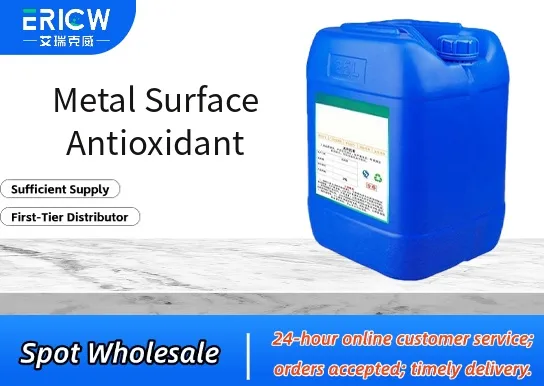
Non-migrating formulation ensures long-term surface protection without leaching into adjacent materials.
Thermally stable up to 220 °C, maintaining efficacy during high-temperature metal processing and storage.
Halogen-free and heavy-metal-free, compliant with RoHS and REACH SVHC requirements.
Fast-drying, solvent-based coating that forms a transparent, non-tacky protective film on ferrous and non-ferrous metals.
Hydrophobic barrier property significantly reduces corrosion initiation under humid or saline conditions.
Protection of machined steel, aluminum, and copper components during warehouse storage and logistics.
Inter-stage corrosion inhibition for stamped, forged, or rolled metal parts in automotive manufacturing.
Temporary rust prevention for precision tools, dies, molds, and measuring instruments.
Surface passivation of metal substrates prior to painting, plating, or adhesive bonding.
Preservation of spare parts and OEM components in aerospace and industrial equipment supply chains.
| Chemical Type | Blend of hindered phenolic antioxidants and organic corrosion inhibitors |
| Product Form | Liquid concentrate (ready-to-use or dilutable with approved hydrocarbon solvents) |
| Appearance | Clear, pale yellow to amber liquid, free from sediment or haze |
| Flash Point (Tag Closed Cup) | 68 °C (ASTM D56) |
| Primary Applications | Short- to medium-term atmospheric corrosion inhibition (up to 12 months indoor, unsealed) |
| Key Features | Non-volatile residue, low odor, VOC-compliant (< 250 g/L) |
| Benefits | No post-application wiping required; compatible with most common cleaning agents and degreasers |
| Regulatory Compliance | REACH registered (ECHA), RoHS 2.0 compliant, non-Prop 65 listed |
| Common Compatible Systems | Suitability |
| Mineral oil-based rust preventives | Highly Recommended – Forms synergistic barrier layer without phase separation |
| Alkaline aqueous cleaners (pH 9–11) | Recommended – Fully removable via standard rinsing; no residue interference |
| Epoxy and polyester primers | Suitable – Requires 30-minute flash-off time before overcoating; adhesion unaffected |
| Vacuum packaging films (LDPE, PET/AL/PE) | Highly Recommended – No extractables detected per ASTM F2475-22 |
Q1: What is the CAS Registry Number for this product?
A: The proprietary blend does not carry a single CAS number; individual major constituents are documented in the full Safety Data Sheet (SDS Section 3) and include CAS 128-37-0 (Irganox 1076) and CAS 65997-19-7 (benzotriazole derivative).
Q2: What is the recommended application concentration for dip coating?
A: For dip or spray application, use undiluted (100%) for maximum protection on critical parts; for high-volume conveyorized lines, dilute 1:1 with naphtha (CAS 8032-32-4) — always validate film thickness (target: 0.8–1.5 µm) per ASTM D1186.
Q3: How does this antioxidant compare to traditional VCI (Vapor Corrosion Inhibitor) papers?
A: Unlike VCI papers relying on volatile amine diffusion, this product provides direct-contact, non-volatile surface passivation—ideal for sealed enclosures, complex geometries, and environments where vapor-phase inhibitors may contaminate electronics or optics.
Q4: Is migration or solvent extraction into food-contact polymers a concern?
A: No measurable migration was observed in validated testing (EU 10/2011, FDA 21 CFR 175.300) when applied to metals subsequently laminated with FDA-compliant polyolefins at ≤121 °C processing temperatures.
Contact With Us:
E-mail: wangxingqiang@ericwchem.com
Have a Questions? Call Us:
Add:
Building A1, Jiete Industrial Park, Huangpu District, Guangzhou City, Guangdong Province, China