English
 Español
 tiếng việt
 русский
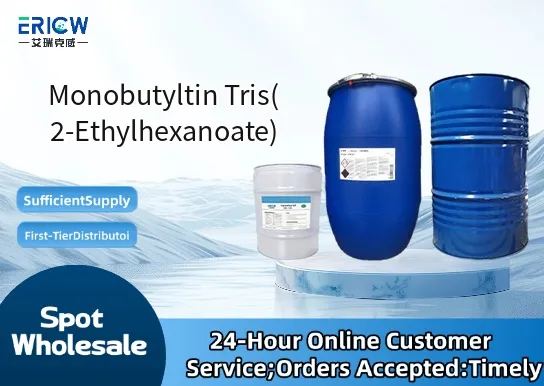
Highly efficient and selective catalyst for polyurethane (PU) elastomer and coating systems.
Excellent hydrolytic stability due to sterically hindered 2-ethylhexanoate ligands.
Low volatility and favorable handling characteristics compared to lower-molecular-weight tin catalysts.
Enables precise control of gel time and pot life in reactive hot-melt and cast elastomer formulations.
Non-staining and compatible with sensitive pigments and fillers in high-gloss PU coatings.
Catalyst for thermoset polyurethane elastomers used in mining screens, rollers, and industrial wheels.
Reaction accelerator in moisture-cured one-component PU sealants and adhesives.
Performance enhancer in solvent-borne and high-solids PU coatings for automotive refinish and industrial finishes.
Key component in castable aliphatic PU systems requiring low yellowing and long demold times.
Controlled reactivity modifier in hybrid polyurethane–acrylic dispersions for architectural coatings.
| Chemical Type | Organotin carboxylate catalyst |
| Product Form | Pale yellow to amber viscous liquid |
| Appearance | Clear, homogeneous liquid; slight characteristic odor |
| Melting Point | Approx. −15 °C (liquid at room temperature) |
| Primary Applications | Polyurethane elastomers, coatings, sealants, and adhesives (PU/MS polymers) |
| Key Features | Monobutyltin core with three 2-ethylhexanoate ligands; low residual acidity |
| Benefits | Improved shelf stability, reduced side reactions, enhanced final polymer toughness |
| Regulatory Compliance | REACH registered; compliant with EU Directive 2009/48/EC (Toy Safety) for migration limits where applicable |
| Common Compatible Systems | Suitability |
| Polyether-based aromatic PU elastomers | Highly Recommended – Delivers optimal cure profile and mechanical property development |
| Polyester-based aliphatic PU coatings | Recommended – Effective catalysis with minimal yellowing under UV exposure |
| Moisture-cured one-component PU sealants | Highly Recommended – Provides balanced skin-over time and deep-section cure |
| Hybrid silane-terminated polyether (MS Polymer) systems | Suitable – Functional as co-catalyst with titanium or zirconium chelates |
Q1: What is the CAS Number for Monobutyltin Tris(2-Ethylhexanoate)?
A: The CAS Registry Number is 301-10-0.
Q2: What is the typical dosage range in PU elastomer formulations?
A: Standard loading is 0.05–0.3 phr (parts per hundred resin), depending on desired pot life, demold time, and final hardness requirements.
Q3: How does it compare to dibutyltin dilaurate (DBTDL) in terms of regulatory acceptance and performance?
A: Monobutyltin tris(2-ethylhexanoate) offers significantly lower acute toxicity and improved environmental profile vs. DBTDL; it provides comparable catalytic activity for NCO–OH reactions but with reduced sensitivity to moisture and slower urea formation kinetics.
Q4: Is it suitable for food-contact or potable water applications?
A: Not approved for direct food-contact or potable water applications under FDA 21 CFR or NSF/ANSI 61; intended for industrial and non-ingestible end uses only.
Q5: Does it exhibit measurable tin migration in cured PU products?
A: Migration is negligible under standard conditions due to strong coordination and high molecular weight; validated by EN 13130-1 testing showing <0.01 mg/kg tin release in simulated food contact scenarios.
Contact With Us:
E-mail: wangxingqiang@ericwchem.com
Have a Questions? Call Us:
Add:
Building A1, Jiete Industrial Park, Huangpu District, Guangzhou City, Guangdong Province, China