English
 Español
 tiếng việt
 русский
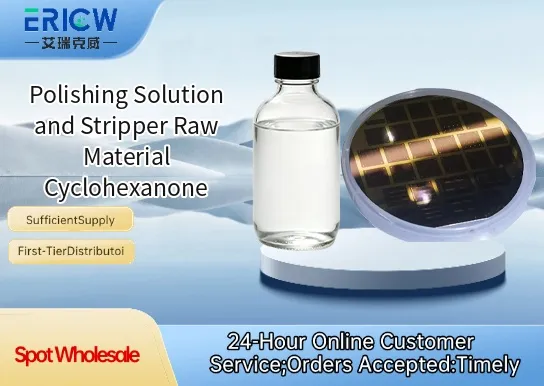
High solvency power for resins, nitrocellulose, and acrylic coatings—ideal for precision polishing and stripping formulations.
Low water miscibility and controlled evaporation rate enable consistent film removal without substrate damage.
Chemically stable under ambient storage conditions with minimal peroxide formation risk.
High purity (>99.5%) ensures reproducible performance in sensitive electronic and optical finishing applications.
Odor-reduced grade available upon request to support industrial hygiene and VOC-compliant manufacturing environments.
Primary solvent in high-performance paint strippers for aerospace composite surfaces.
Key component in optical lens polishing solutions for anti-reflective and hard-coat layer removal.
Carrier solvent in semiconductor wafer cleaning and photoresist stripping concentrates.
Blending agent in automotive trim reconditioning formulations for clear-coat defect correction.
Processing aid in precision metal finishing for deburring and surface activation prior to plating.
| Chemical Type | Cyclic ketone |
| Product Form | Liquid (clear, colorless) |
| Appearance | Clear, water-white liquid with characteristic mild ketonic odor |
| Melting Point | −47 °C |
| Boiling Point (760 mmHg) | 161 °C |
| Density (20 °C) | 0.947–0.952 g/cm³ |
| Solubility in Water | ~5.3 g/L (20 °C) |
| Regulatory Compliance | REACH registered; compliant with EU CLP Regulation (H226, H319, H336); non-REACH SVHC listed |
| Common Compatible Systems | Suitability |
| Nitrocellulose-based stripping systems | Highly Recommended – Excellent solubilizing synergy and viscosity control |
| Acrylic resin polishing emulsions | Recommended – Requires co-solvent blending (e.g., ethanol or ethyl acetate) for optimal dispersion |
| Polyurethane coating removers | Suitable – Effective at elevated temperatures; use with corrosion inhibitors for metal substrates |
| UV-curable acrylate residue cleaners | Recommended – Best used in pre-diluted, low-concentration rinse formulations |
Q1: What is the CAS Registry Number for cyclohexanone used in polishing and stripping formulations?
A: The CAS number is 108-94-1. All commercial-grade batches are verified via GC-MS against this reference standard.
Q2: What is the typical recommended concentration range when formulating a non-aqueous polishing solution?
A: For most industrial polishing concentrates, cyclohexanone is used at 30–65 wt% alongside co-solvents and rheology modifiers—exact ratios depend on substrate sensitivity and removal kinetics requirements.
Q3: How does cyclohexanone compare to methyl ethyl ketone (MEK) or acetone in stripping performance?
A: Cyclohexanone offers slower evaporation, higher boiling point, and superior solvency for tough resin systems versus MEK or acetone—reducing rework risk and improving worker exposure control.
Q4: Is cyclohexanone subject to food contact or pharmaceutical migration testing requirements?
A: Cyclohexanone is not approved for direct food contact applications. When used in packaging equipment cleaning, residual limits must comply with FDA 21 CFR §175.300 and EU Plastics Regulation (EU) No 10/2011 extractable thresholds.
Contact With Us:
E-mail: wangxingqiang@ericwchem.com
Have a Questions? Call Us:
Add:
Building A1, Jiete Industrial Park, Huangpu District, Guangzhou City, Guangdong Province, China