English
 Español
 tiếng việt
 русский
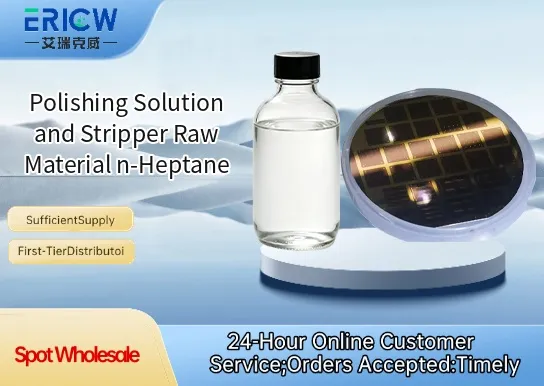
High-purity hydrocarbon solvent with >99.5% assay, ensuring consistent performance in precision polishing and stripping formulations.
Low water content (<50 ppm) minimizes emulsion formation and phase separation in multi-component systems.
Controlled volatility (boiling range 98–100 °C) enables efficient residue removal without thermal degradation of sensitive substrates.
Non-halogenated and chlorine-free, supporting environmental compliance and reducing corrosion risk on aluminum and stainless steel equipment.
Low aromatic content (<0.1%) ensures compatibility with optical-grade polymers and photoresist layers during microelectronics cleaning.
Primary carrier solvent in semiconductor wafer post-CMP (Chemical Mechanical Polishing) residue removal formulations.
Key diluent in industrial metal surface strippers for anodized aluminum, electroplated coatings, and lacquer finishes.
Co-solvent in high-gloss optical lens polishing solutions to control evaporation rate and prevent streaking.
Extraction medium in pharmaceutical intermediate purification where non-polar selectivity and low toxicity are critical.
Process solvent in precision cleaning of MEMS devices and micro-opto-electro-mechanical systems (MOEMS).
| Chemical Type | Saturated aliphatic hydrocarbon (n-alkane) |
| Product Form | Liquid at room temperature |
| Appearance | Clear, colorless, volatile liquid |
| Melting Point | −90.6 °C |
| Boiling Range | 98–100 °C at 760 mmHg |
| Density (20 °C) | 0.684–0.688 g/cm³ |
| Flash Point (Tag Closed Cup) | −4 °C |
| Regulatory Compliance | REACH registered; TSCA listed; not classified as CMR or PBT under EU CLP |
| Common Compatible Systems | Suitability |
| Isoparaffinic co-solvent blends (e.g., Isopar™ G, Isopar™ L) | Highly Recommended – Excellent miscibility and synergistic volatility control |
| Ester-based stripping agents (e.g., DPGME, GBEE) | Recommended – Partial miscibility; requires formulation optimization for stability |
| Alcohol-based polishing carriers (e.g., IPA, ethanol) | Suitable – Limited miscibility; use with surfactant stabilization for homogeneous mixtures |
| Fluorinated solvents (e.g., Vertrel™ XF) | Suitable – Immiscible; recommended only for phase-separated dual-solvent cleaning processes |
Q1: What is the CAS Number for n-Heptane used in polishing and stripping formulations?
A: The CAS Registry Number for n-Heptane is 142-82-5. Our specification complies with ACS Reagent Grade and ASTM D845-22 purity standards.
Q2: What is the typical recommended usage concentration when formulating a metal surface stripper?
A: In ready-to-use strippers, n-Heptane typically serves as 30–60 wt% of the solvent phase, balancing evaporation rate, solvency power, and safety thresholds per OSHA PEL (400 ppm TWA).
Q3: How does n-Heptane compare to n-Hexane in polishing applications?
A: n-Heptane offers higher boiling point (+12 °C), lower vapor pressure, and reduced neurotoxicity risk versus n-Hexane—making it preferred for controlled-evaporation polishing steps and safer workplace handling.
Q4: Does this grade meet USP/EP requirements for residual solvent testing in pharmaceutical manufacturing?
A: While not certified to USP <846> or Ph. Eur. 5.4, this grade meets ICH Q3C Class 3 solvent limits (5000 ppm) and is routinely validated for use in non-sterile API intermediate purification where n-Heptane is fully removed prior to final isolation.
Q5: Can n-Heptane cause migration or extraction from polymer substrates during polishing contact?
A: n-Heptane exhibits minimal swelling in polypropylene and HDPE but may extract plasticizers from PVC or low-MW additives from polycarbonate; compatibility testing under actual process time/temperature conditions is strongly advised.
Contact With Us:
E-mail: wangxingqiang@ericwchem.com
Have a Questions? Call Us:
Add:
Building A1, Jiete Industrial Park, Huangpu District, Guangzhou City, Guangdong Province, China