English
 Español
 tiếng việt
 русский
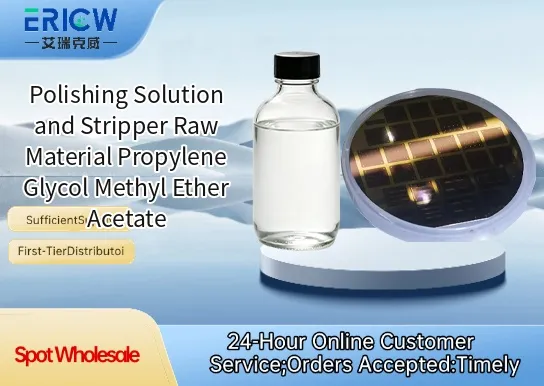
High solvency power for resins, lacquers, and cured coatings without aggressive corrosion to substrates.
Low volatility and favorable evaporation rate—enables controlled film formation and residue-free drying.
Excellent water-miscibility and compatibility with common co-solvents (e.g., alcohols, glycol ethers).
Low odor profile and reduced workplace exposure risk compared to traditional chlorinated or aromatic strippers.
Non-halogenated and non-ozone-depleting—supports sustainable formulation goals under global EHS frameworks.
Active ingredient in aqueous-based industrial paint and varnish strippers for metal and wood substrates.
Key solvent carrier in precision optical lens polishing solutions for anti-reflective and hard-coat removal.
Co-solvent in semiconductor wafer cleaning formulations for photoresist and post-etch residue stripping.
Performance enhancer in automotive refinish clearcoat thinners and blending agents for high-gloss polish systems.
Functional component in electronics-grade conformal coating removers used in PCB rework and repair.
| Chemical Type | Glycol ether ester (PGMEA) |
| Product Form | Clear, colorless liquid |
| Appearance | Transparent, free of suspended matter or haze |
| Melting Point | −85 °C (approx.) |
| Boiling Point (at 760 mmHg) | 146–148 °C |
| Density (20 °C) | 0.930–0.935 g/cm³ |
| Solubility in Water | Complete miscibility |
| Regulatory Compliance | REACH registered; TSCA listed; non-Prop 65 listed (California); VOC-exempt in most U.S. jurisdictions (per EPA Method 24) |
| Common Compatible Systems | Suitability |
| Aqueous alkaline stripper formulations (e.g., sodium hydroxide + surfactant blends) | Highly Recommended – Enhances resin swelling and interfacial penetration without phase separation |
| Acrylic and polyurethane-based polishing slurries | Recommended – Improves dispersion stability and surface wetting on coated optics |
| Electronics-grade isopropanol (IPA) and ethanol dilution systems | Highly Recommended – Maintains low surface tension and rapid flash-off in cleanroom applications |
| Waterborne epoxy and polyester coating removers | Suitable – Effective at ≤30 wt% loading; requires pH stabilization to prevent ester hydrolysis |
Q1: What is the CAS Registry Number for Propylene Glycol Methyl Ether Acetate?
A: The CAS number is 108-65-6.
Q2: What is the typical recommended concentration range when formulating a stripping solution?
A: For industrial aqueous strippers, use 5–20 wt%; for high-performance optical polishers, 15–35 wt% is common—always validate via compatibility and residue testing per substrate.
Q3: How does PGMEA compare to ethyl acetate or NMP in stripping efficiency and safety?
A: PGMEA offers higher solvency than ethyl acetate for crosslinked polymers and lower toxicity than NMP (no reproductive hazard classification); it also exhibits superior water compatibility and lower vapor pressure than both.
Q4: Is PGMEA subject to migration or leaching concerns in food-contact or medical device cleaning applications?
A: PGMEA is not approved for direct food-contact applications under FDA 21 CFR §175.300 or EU 10/2011; residual limits must be validated per ISO 10993-12 for medical device cleaning—typically <1 ppm in final rinse water.
Q5: Does PGMEA require special handling for regulatory compliance in the EU or North America?
A: Yes—it is classified as Eye Irritant (H319) and Skin Irritant (H315) under CLP/GHS; SDS must reflect this. It is exempt from VOC reporting in most U.S. states but requires full REACH documentation (including SVHC screening) for EU supply.
Contact With Us:
E-mail: wangxingqiang@ericwchem.com
Have a Questions? Call Us:
Add:
Building A1, Jiete Industrial Park, Huangpu District, Guangzhou City, Guangdong Province, China