English
 Español
 tiếng việt
 русский
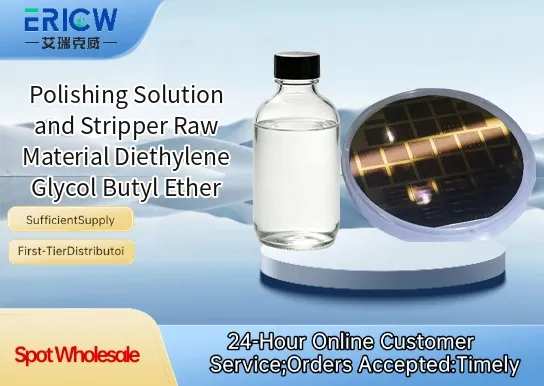
High solvency power for resins, lacquers, and cured coatings—enables efficient removal without aggressive abrasion.
Low volatility and favorable evaporation rate—provides extended working time and improved process control in ambient conditions.
Excellent co-solvency with water, alcohols, and glycol ethers—enhances formulation stability and compatibility in multi-component systems.
Low surface tension and high wetting capability—ensures uniform penetration into micro-roughness and interfacial layers.
Non-corrosive to common metals (aluminum, stainless steel, copper) under standard dilution and contact time protocols.
Key active ingredient in industrial-grade paint and varnish strippers for automotive refinishing and aerospace component rework.
Functional solvent in precision optical lens polishing formulations for anti-reflective and hard-coat layer removal.
Performance enhancer in semiconductor wafer cleaning solutions targeting photoresist and spin-on glass residues.
Co-solvent in metal surface pretreatment baths prior to electroplating or anodizing—improves contaminant lift and rinse efficiency.
Stabilizing carrier in high-solids ink stripping systems used in flexible packaging gravure and flexo printing plate maintenance.
| Chemical Type | Glycol ether (dialkyl ether of diethylene glycol) |
| Product Form | Clear, colorless liquid |
| Appearance | Transparent, free from suspended matter |
| Melting Point | Approx. −68 °C |
| Boiling Point (760 mmHg) | Approx. 230 °C |
| Density (20 °C) | 0.952–0.958 g/cm³ |
| Solubility in Water | Complete miscibility at 20 °C |
| Regulatory Compliance | REACH registered; compliant with EU CLP (no CMR classification); TSCA listed |
| Common Compatible Systems | Suitability |
| Aqueous alkaline stripper concentrates | Highly Recommended – Enhances hydroxide-mediated ester cleavage and resin swelling |
| Organic solvent blends (e.g., NMP, DMSO, ethyl lactate) | Recommended – Improves viscosity control and reduces overall VOC content |
| Surfactant-stabilized emulsion systems | Suitable – Acts as coupling agent to maintain phase homogeneity during storage and use |
| Acid-catalyzed coating dissolution matrices | Suitable – Provides thermal stability and prevents premature acid volatilization |
Q1: What is the CAS Registry Number for Diethylene Glycol Butyl Ether?
A: The CAS number is 112-34-5.
Q2: What is the typical recommended usage concentration in aqueous stripping formulations?
A: Standard loading ranges from 5–15 wt% in formulated products, depending on substrate sensitivity and target coating thickness—always validate via small-scale compatibility testing.
Q3: How does Diethylene Glycol Butyl Ether compare to Propylene Glycol Butyl Ether (PGBE) in stripping performance?
A: DEGBE exhibits higher boiling point and greater resin solvency than PGBE, making it more effective for thermally stable or crosslinked coatings—but with slightly slower evaporation kinetics in open-air applications.
Q4: Is migration or leaching a concern when used in food-contact equipment cleaning?
A: When applied per validated cleaning protocols—including proper rinsing and drying—residual levels fall well below FDA and EC 10/2011 thresholds; however, direct food-contact approval requires end-product formulation review by regulatory specialists.
Contact With Us:
E-mail: wangxingqiang@ericwchem.com
Have a Questions? Call Us:
Add:
Building A1, Jiete Industrial Park, Huangpu District, Guangzhou City, Guangdong Province, China