English
 Español
 tiếng việt
 русский
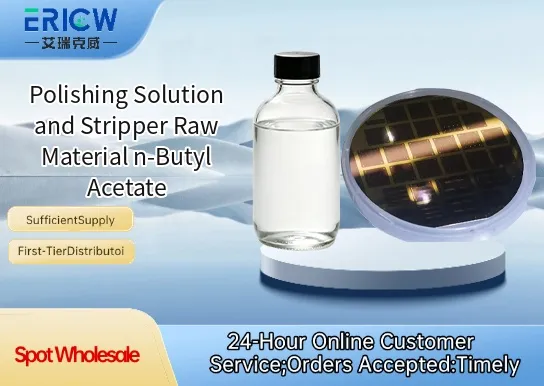
High solvency power for cellulose esters, acrylics, and nitrocellulose-based coatings — ideal for fast-acting polishing and stripping formulations.
Low water miscibility ensures phase separation control in multi-component solvent blends, enhancing formulation stability.
Moderate evaporation rate (relative evaporation rate ≈ 1.0 vs. butyl acetate = 1.0) supports balanced drying kinetics without blistering or wrinkling.
Low toxicity profile compared to chlorinated or aromatic solvents, supporting safer handling and reduced occupational exposure risk.
Excellent compatibility with common co-solvents (e.g., ethanol, acetone, ethyl acetate) enabling flexible, high-performance blend design.
Primary active solvent in industrial-grade paint strippers for wood, metal, and plastic substrates.
Key carrier and solubilizer in automotive and aerospace polishing compounds for clear coat leveling and defect removal.
Functional component in precision electronics cleaning solutions for flux residue dissolution prior to conformal coating.
Formulation base for restoration-grade furniture polish removers requiring non-aggressive substrate interaction.
Co-solvent in ink reformulation and gravure printing blanket cleaners for rapid polymer film dissolution.
| Chemical Type | Organic ester (n-butyl acetate) |
| CAS Number | 123-86-4 |
| Product Form | Clear, colorless liquid |
| Appearance | Transparent, free from suspended matter |
| Odor | Characteristic fruity odor |
| Boiling Point (°C) | 126.1 |
| Density (g/cm³ at 20°C) | 0.8825 |
| Purity (GC) | ≥ 99.5% |
| Common Compatible Systems | Suitability |
| Nitrocellulose lacquer systems | Highly Recommended – Rapid dissolution with minimal gelation or haze formation |
| Acrylic resin-based polishing emulsions | Recommended – Effective solubilization when blended with nonionic surfactants and glycol ethers |
| Epoxy-coated metal surface strippers | Suitable – Requires co-formulation with phenolic or amide-type accelerators for full efficacy |
| Water-reducible coating removers | Recommended – Stable in low-water (<5%) emulsified systems with proper emulsifier selection |
Q1: What is the CAS number for n-butyl acetate used in polishing and stripping formulations?
A: The CAS Registry Number for n-butyl acetate is 123-86-4. This identifier applies to all technical-grade and purified forms used in industrial solvent applications.
Q2: What is the typical recommended concentration range of n-butyl acetate in ready-to-use stripping solutions?
A: In commercial stripping formulations, n-butyl acetate is typically used at 20–45 wt% as the primary active solvent, often combined with methanol, ethylene glycol monobutyl ether, or dibasic esters for synergistic performance.
Q3: How does n-butyl acetate compare to methyl ethyl ketone (MEK) or toluene in stripping efficiency and safety?
A: n-Butyl acetate offers lower volatility and higher flash point (22°C) than MEK (−2°C) or toluene (4°C), improving workplace safety. While slightly slower in initial attack on hard coatings than MEK, it provides superior film swelling and reduced substrate stress—especially on aged plastics and laminated composites.
Q4: Is n-butyl acetate compliant with REACH and FDA 21 CFR §175.300 for incidental food contact applications?
A: Yes — n-butyl acetate is registered under REACH (ECHA Annex XIV not applicable) and permitted under FDA 21 CFR §175.300 as an indirect food additive solvent in resinous and polymeric coatings, provided residual levels meet established migration limits (≤ 0.5 mg/dm² for overall migration).
Q5: Does n-butyl acetate exhibit extractable or leachable behavior in medical device cleaning validation studies?
A: When properly formulated and dried, n-butyl acetate shows negligible residual extractables in ISO 10993-compliant testing. Its relatively high volatility ensures near-complete removal post-rinse; however, validation requires confirmation via GC-MS per USP <87> and <88> protocols for specific device materials.
Contact With Us:
E-mail: wangxingqiang@ericwchem.com
Have a Questions? Call Us:
Add:
Building A1, Jiete Industrial Park, Huangpu District, Guangzhou City, Guangdong Province, China