English
 Español
 tiếng việt
 русский
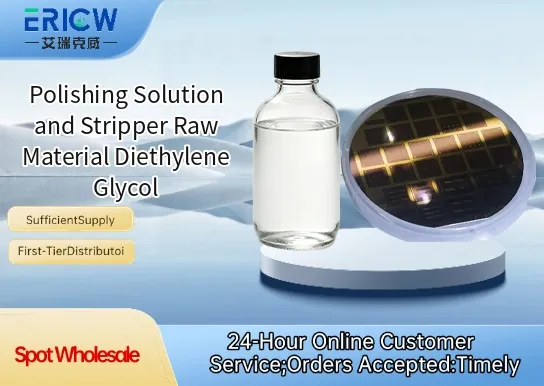
High solvency for resins, lacquers, and cured polymer films—enabling efficient stripping without aggressive corrosion.
Low volatility and high boiling point (245 °C), supporting stable performance in heated polishing and stripping formulations.
Excellent water-miscibility and compatibility with glycol ethers, alcohols, and amines—facilitating versatile formulation design.
Non-halogenated and low-toxicity profile relative to chlorinated or phenolic alternatives—enhancing workplace safety and regulatory acceptance.
Effective co-solvent that improves active ingredient dispersion and substrate wetting in precision optical and electronic surface treatments.
Raw material in semiconductor wafer cleaning formulations for photoresist and hard mask removal.
Key component in optical lens polishing solutions for anti-reflective coating residue dissolution.
Functional solvent in industrial metal finishing strippers for epoxy and polyurethane coatings.
Stabilizing co-solvent in automotive headlight lens refurbishment kits to prevent hazing during acrylic clear coat removal.
Carrier medium in precision electronics rework fluids for conformal coating and underfill debonding.
| Chemical Type | Glycol ether derivative (dialcohol) |
| Product Form | Clear, colorless liquid |
| Appearance | Transparent, slightly viscous liquid with mild characteristic odor |
| Melting Point | −10.5 °C |
| Boiling Point (at 760 mmHg) | 244–245 °C |
| Density (20 °C) | 1.117–1.119 g/cm³ |
| Water Solubility | Completely miscible |
| Regulatory Compliance | REACH registered; compliant with TSCA; non-Prop 65 listed (as of current inventory) |
| Common Compatible Systems | Suitability |
| Aqueous alkaline stripper systems (e.g., NaOH + surfactant blends) | Highly Recommended – Enhances solubilization of hydrophobic residues without phase separation |
| Glycol ether–alcohol co-solvent matrices (e.g., DPM, EGBE, IPA) | Highly Recommended – Synergistic viscosity and evaporation control in sprayable formulations |
| Chelating agent-based metal polish concentrates (e.g., EDTA, citric acid) | Recommended – Maintains chelator stability and prevents precipitation at elevated temperatures |
| UV-curable acrylate stripping gels | Suitable – Acts as plasticizer and penetration enhancer; requires thermal post-treatment for full volatilization |
Q1: What is the CAS number for Diethylene Glycol used in polishing and stripping applications?
A: The CAS Registry Number is 111-46-6. This applies to technical-grade diethylene glycol meeting ASTM D1374 and ISO 10361 specifications for industrial solvent use.
Q2: What is the typical recommended concentration range when formulating a water-based stripping solution?
A: For most industrial formulations, 10–25 wt% diethylene glycol is optimal—balancing solvency, evaporation rate, and compatibility with surfactants and corrosion inhibitors.
Q3: How does diethylene glycol compare to triethylene glycol or propylene glycol in high-temperature stripping applications?
A: Diethylene glycol offers superior resin solvency and lower viscosity than triethylene glycol, while providing higher thermal stability and slower evaporation than propylene glycol—making it ideal for sustained-contact, heated processes.
Q4: Is diethylene glycol subject to migration concerns in food-contact or medical device cleaning applications?
A: Diethylene glycol is not approved for direct food-contact applications per FDA 21 CFR §173.370 or EU Regulation (EC) No 1935/2004. Residual traces must be fully removed via validated rinsing protocols before release of cleaned medical devices.
Q5: Does this material require special handling under GHS or OSHA standards?
A: Yes—it is classified as GHS Category 4 skin irritant (H319) and Category 3 specific target organ toxicity (repeated exposure, H372). Safety data sheet (SDS) review and chemical-resistant gloves/goggles are mandatory during handling.
Contact With Us:
E-mail: wangxingqiang@ericwchem.com
Have a Questions? Call Us:
Add:
Building A1, Jiete Industrial Park, Huangpu District, Guangzhou City, Guangdong Province, China