English
 Español
 tiếng việt
 русский
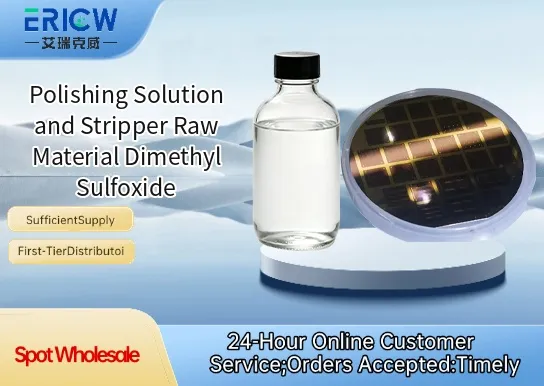
High polarity and exceptional solvating power for resins, photoresists, and cured polymer films.
Low volatility and high boiling point (189 °C), enabling stable performance in elevated-temperature stripping processes.
Non-toxic, non-carcinogenic, and biodegradable under aerobic conditions — compliant with industrial hygiene best practices.
Excellent miscibility with water, alcohols, ketones, and chlorinated solvents — facilitates formulation flexibility.
Chemically inert toward most metals and engineering plastics, minimizing equipment corrosion and substrate damage.
Semiconductor wafer cleaning and photoresist stripping in front-end-of-line (FEOL) and back-end-of-line (BEOL) processes.
Removal of epoxy, polyimide, and acrylic-based coatings from precision optics and MEMS components.
Formulation ingredient in metal polishing slurries for copper, aluminum, and stainless steel substrates.
Carrier solvent for active agents in PCB solder mask strippers and conformal coating removers.
Decontamination medium for analytical instrumentation parts and cleanroom tooling surfaces.
| Chemical Type | Organosulfur compound; aprotic polar solvent |
| Product Form | Clear, colorless to pale yellow liquid |
| Appearance | Transparent, homogeneous liquid with mild characteristic odor |
| Melting Point | 18.5 °C |
| Boiling Point | 189 °C at 760 mmHg |
| Primary Applications | Polishing solution base, resist stripper co-solvent, coating removal enhancer |
| Key Features | High dipole moment (4.0 D), low surface tension (43.5 mN/m at 20 °C), viscosity 1.99 cP at 25 °C |
| Regulatory Compliance | REACH registered; non-CLP classified for acute toxicity, skin irritation, or mutagenicity |
| Common Compatible Systems | Suitability |
| Aqueous alkaline stripper formulations (e.g., NaOH + surfactants) | Highly Recommended – Enhances hydrolysis kinetics and film lift-off efficiency |
| Propylene glycol monomethyl ether acetate (PGMEA)-based polishing concentrates | Recommended – Improves solubility of crosslinked residues without phase separation |
| Stainless steel and titanium process tanks | Highly Recommended – No pitting or stress corrosion cracking observed under standard operating conditions |
| Polypropylene (PP) and fluoropolymer (PTFE, FEP) fluid-handling components | Suitable – Excellent chemical resistance; no swelling or degradation after 72-h continuous exposure |
Q1: What is the CAS Registry Number for this grade of dimethyl sulfoxide?
A: The CAS Number is 67-68-5. This applies to all technical-grade and electronic-grade DMSO meeting USP/ACS specifications.
Q2: What is the recommended concentration range when used as a co-solvent in aqueous stripping formulations?
A: Typical working concentrations range from 5–25 wt% in formulated strippers; optimal performance for thick photoresist removal is achieved at 15–20 wt% with controlled temperature (60–80 °C).
Q3: How does DMSO compare to N-Methyl-2-pyrrolidone (NMP) in terms of safety and regulatory acceptance?
A: Unlike NMP (CAS 872-50-4), which is reprotoxic and subject to EU REACH authorization, DMSO has no harmonized CLP hazard classification and is widely accepted in semiconductor and medical device manufacturing under current global regulations.
Q4: Is extractable residue migration a concern when using DMSO on surfaces intended for pharmaceutical contact?
A: Residual DMSO is readily removed by aqueous rinse and vacuum drying; validated cleaning protocols show <10 ppm residual levels on stainless steel and glass surfaces, well below ICH Q5C thresholds for non-aqueous solvents.
Contact With Us:
E-mail: wangxingqiang@ericwchem.com
Have a Questions? Call Us:
Add:
Building A1, Jiete Industrial Park, Huangpu District, Guangzhou City, Guangdong Province, China