English
 Español
 tiếng việt
 русский
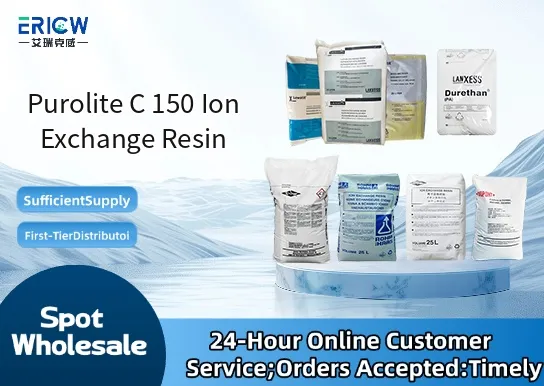
High-capacity strong acid cation exchange resin with sulfonic acid functional groups.
Exceptional physical and chemical stability, suitable for high-flow and high-pressure service conditions.
Uniform spherical bead morphology ensures low pressure drop and consistent hydraulic performance.
Optimized for efficient removal of hardness ions (Ca²⁺, Mg²⁺) in softening applications.
Regenerable with low-concentration sodium chloride brine, enabling cost-effective cyclic operation.
Domestic and commercial water softening systems.
Pretreatment for reverse osmosis (RO) and deionization (DI) systems.
Industrial boiler feedwater conditioning to prevent scale formation.
Food and beverage processing where consistent low-hardness water is required.
| Chemical Type | Strong Acid Cation (SAC), Gel-type, Sulfonated Polystyrene-DVB |
| Product Form | Moist, spherical beads |
| Appearance | Opaque amber beads |
| Functional Group | Sulfonic acid (–SO₃H) |
| Ion Form | Sodium (Na⁺) |
| Moisture Content | 45–50% (as shipped) |
| Particle Size Range | 0.3–1.2 mm |
| Uniformity Coefficient | ≤ 1.6 |
Q1: What is the primary functional group and ionic form of Purolite C 150?
A: Purolite C 150 is a strong acid cation exchange resin in the sodium (Na⁺) form, featuring sulfonic acid functional groups grafted onto a highly crosslinked polystyrene-divinylbenzene matrix.
Q2: Is Purolite C 150 suitable for potable water treatment applications?
A: Yes — Purolite C 150 is widely used in municipal and residential drinking water softening and dealkalization systems, and it complies with relevant global standards for indirect food contact and drinking water additive safety when regenerated and operated per manufacturer guidelines.
Q3: How does Purolite C 150 compare to gel-type cation resins in terms of physical stability and operating capacity?
A: Purolite C 150 features a macroporous structure, offering superior resistance to osmotic shock, fouling, and mechanical degradation compared to conventional gel-type resins — particularly in challenging feedwaters with high turbidity, organic content, or frequent regeneration cycles.
Q4: What regeneration chemicals and typical conditions are recommended for Purolite C 150?
A: Sodium chloride (NaCl) brine is the standard regenerant. Regeneration efficiency depends on brine concentration, flow rate, contact time, and service cycle history — optimal performance is generally achieved using 8–12% NaCl at controlled linear velocities and adequate rinse volumes.
Contact With Us:
E-mail: wangxingqiang@ericwchem.com
Have a Questions? Call Us:
Add:
Building A1, Jiete Industrial Park, Huangpu District, Guangzhou City, Guangdong Province, China