English
 Español
 tiếng việt
 русский
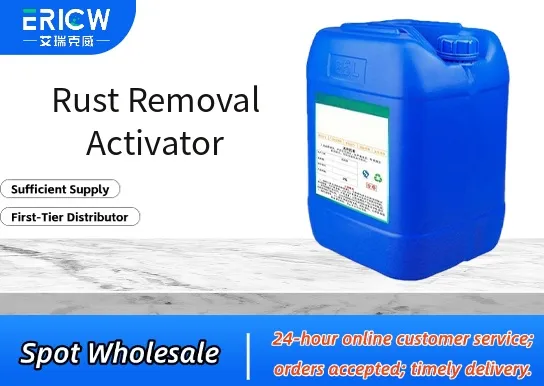
Non-acidic, chelating-based formulation minimizes substrate corrosion and hydrogen embrittlement risk.
Fast-acting at ambient temperatures (15–30°C), achieving visible rust dissolution within 5–15 minutes on light-to-moderate oxidation layers.
Water-rinseable and biodegradable under OECD 301B conditions, supporting sustainable industrial cleaning protocols.
pH-stabilized between 7.2–8.0 to ensure compatibility with mild steel, cast iron, and aluminum alloys during short-term immersion.
Low-VOC (<50 g/L) and free of heavy metals, phosphates, and chlorinated solvents — compliant with global environmental stewardship standards.
Precision cleaning of machined components prior to plating, painting, or adhesive bonding in automotive and aerospace manufacturing.
Pre-treatment of ferrous parts in metal fabrication shops to replace hazardous acid pickling baths.
Maintenance cleaning of hydraulic cylinders, valves, and tooling in oil & gas and power generation facilities.
Rust mitigation for stored inventory of fasteners, brackets, and structural steel before packaging or shipment.
On-site restoration of corroded instrumentation housings and control panel enclosures in chemical processing plants.
| Chemical Type | Organic chelating agent blend with synergistic corrosion inhibitors |
| Product Form | Concentrated liquid (ready-to-dilute) |
| Appearance | Clear, pale amber liquid, homogeneous and free of sediment |
| pH (1% aqueous solution, 25°C) | 7.4–7.8 |
| Density (25°C) | 1.06–1.09 g/cm³ |
| Primary Applications | Immersion, spray, or wipe-on rust removal; pre-paint surface activation |
| Key Features | No fumes, non-oxidizing, non-hazardous shipping classification (UN3082, Class 9) |
| Regulatory Compliance | REACH registered; SDS available per ISO 11014; compliant with EPA Safer Choice Criteria (v2023) |
| Common Compatible Systems | Suitability |
| Alkaline degreasing lines (post-rinse stage) | Highly Recommended – Designed for seamless integration without foam or residue carryover |
| Automated spray washers (stainless steel construction) | Highly Recommended – Stable across 30–60°C operating range; no nozzle clogging observed |
| Manual dip tanks with polypropylene or HDPE liners | Recommended – Compatible with common tank materials; avoid unlined carbon steel tanks |
| Ultrasonic cleaning systems (40 kHz) | Suitable – Effective enhancement of removal kinetics; verify transducer material compatibility (avoid aluminum fixtures) |
Q1: What is the CAS Registry Number for Rust Removal Activator?
A: The product is a proprietary multi-component formulation; individual ingredients are disclosed on the Safety Data Sheet (SDS), but the final mixture does not carry a single CAS number per IUPAC and ECHA guidelines.
Q2: What is the recommended dilution ratio for immersion applications?
A: For standard rust removal, dilute 1:10 to 1:20 (v/v) with deionized or softened water; heavier oxide layers may require 1:5 concentration and 20–30 minute dwell time at 25°C.
Q3: How does this activator compare to phosphoric acid-based rust converters?
A: Unlike phosphoric acid systems that form insoluble phosphate coatings, this activator fully solubilizes rust (Fe₂O₃/FeOOH) into stable, rinseable complexes—enabling true surface restoration rather than encapsulation.
Q4: Is there any risk of extractables or leachables when used on parts destined for food-contact equipment?
A: When rinsed thoroughly with potable water post-treatment (minimum 2× 30-second rinses), residual levels fall below FDA 21 CFR §178.3910 thresholds; validation testing per ASTM F2859 is recommended for critical applications.
Q5: Does Rust Removal Activator require special disposal procedures?
A: Spent solutions containing dissolved iron can be treated via standard pH-adjusted precipitation (to pH 8.5–9.0) followed by filtration; resulting sludge is non-hazardous per TCLP testing and suitable for landfill disposal under local regulations.
Contact With Us:
E-mail: wangxingqiang@ericwchem.com
Have a Questions? Call Us:
Add:
Building A1, Jiete Industrial Park, Huangpu District, Guangzhou City, Guangdong Province, China