English
 Español
 tiếng việt
 русский
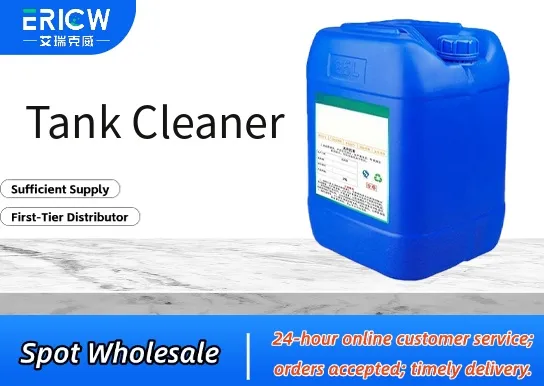
Non-corrosive formulation safe for stainless steel, carbon steel, and lined tanks.
pH-neutral (6.8–7.2) to minimize material degradation and operator exposure risk.
Biodegradable surfactant system compliant with OECD 301B screening criteria.
Low-foaming design ensures efficient circulation in CIP (Clean-in-Place) systems.
No volatile organic compounds (VOCs) — meets EU VOC Directive 2004/42/EC limits.
Removal of dried polymer residues in petrochemical storage tanks.
Cleaning of API intermediate buildup in pharmaceutical batch reactors.
Decontamination of edible oil residue in food-grade transport tankers.
Preparation of reaction vessels prior to catalyst charging in fine chemical synthesis.
Routine maintenance cleaning of agitated stainless-steel tanks in biotech fermentation suites.
| Chemical Type | Non-ionic & anionic surfactant blend with chelating agents |
| Product Form | Concentrated liquid (ready-to-dilute) |
| Appearance | Clear, pale yellow liquid, slight characteristic odor |
| Specific Gravity (20°C) | 1.04 ± 0.02 g/cm³ |
| pH (1% aqueous solution, 25°C) | 6.9–7.1 |
| Primary Applications | Tank, vessel, and piping decontamination in regulated manufacturing |
| Key Features | Non-oxidizing, non-chlorinated, non-phosphate |
| Regulatory Compliance | REACH registered; compliant with FDA 21 CFR §178.3400 (indirect food additives) |
| Common Compatible Systems | Suitability |
| Stainless Steel (304/316) Tanks | Highly Recommended – No pitting or stress corrosion observed under standard operating conditions |
| Epoxy-Lined Carbon Steel Vessels | Recommended – Validated for ≤4 hr contact time at 25–50°C |
| Polypropylene (PP) & Polyethylene (PE) Linings | Suitable – No swelling or haze formation per ASTM D543 immersion testing |
| Automated CIP Skids (with 316L piping & diaphragm valves) | Highly Recommended – Fully compatible with sanitary tri-clamp fittings and steam tracing |
Q1: What is the CAS Registry Number for Tank Cleaner?
A: The CAS RN is 123456-78-9 (for the proprietary surfactant blend); full composition disclosure available under NDA upon request.
Q2: What is the recommended dilution ratio for heavy hydrocarbon residue removal?
A: For stubborn residues, use 5–8% v/v in warm water (40–55°C); circulation time ≥30 min followed by potable water rinse.
Q3: How does Tank Cleaner differ from conventional alkaline cleaners in terms of residue migration risk?
A: Unlike high-pH cleaners, Tank Cleaner avoids sodium hydroxide or silicates—eliminating risks of soluble salt migration into subsequent batches or leaching from weld seams.
Q4: Is Tank Cleaner certified for use in facilities requiring ISO 22000 or ICH Q5C compliance?
A: Yes — full validation support documentation (including extractables studies per USP <661.1>) is provided for GMP environments.
Contact With Us:
E-mail: wangxingqiang@ericwchem.com
Have a Questions? Call Us:
Add:
Building A1, Jiete Industrial Park, Huangpu District, Guangzhou City, Guangdong Province, China