English
 Español
 tiếng việt
 русский
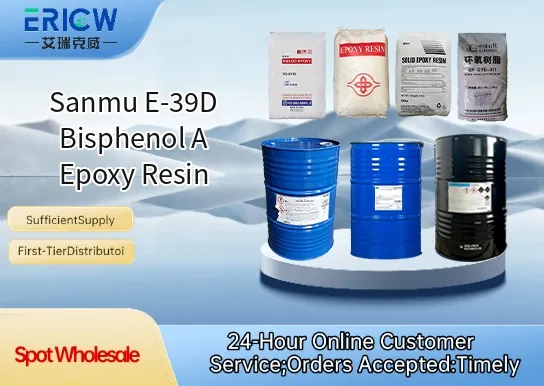
High purity bisphenol A-based epoxy resin with consistent molecular weight distribution.
Excellent thermal stability and long pot life at ambient processing temperatures.
Superior adhesion to metals, composites, and cured polymer substrates.
Low ionic chloride content (< 500 ppm), ensuring enhanced corrosion resistance in protective coatings.
Optimized for compatibility with common amine and anhydride curing agents.
Structural adhesives for aerospace and automotive bonding.
High-performance protective coatings for marine and offshore infrastructure.
Electrical encapsulation and insulating varnishes for motors and transformers.
Composite matrix resin for carbon fiber and glass fiber reinforced laminates.
Industrial flooring systems requiring chemical and abrasion resistance.
| Chemical Type | Bisphenol A diglycidyl ether (DGEBA) |
| Product Form | Clear to pale yellow viscous liquid |
| Appearance | Transparent, slightly viscous liquid at 25°C |
| Epoxy Equivalent Weight (EEW) | 185–192 g/eq |
| Viscosity (25°C) | 12,000–16,000 mPa·s |
| Chloride Content | ≤ 500 ppm |
| Softening Point | Not applicable (liquid at room temperature) |
| Primary Applications | Adhesives, coatings, composites, electrical encapsulation |
Q1: What is the primary application of Sanmu E-39D in industrial coatings?
A: Sanmu E-39D is widely used as a reactive binder in high-performance industrial maintenance and protective coatings, where it contributes to excellent adhesion, chemical resistance, and mechanical durability—particularly in solvent-based and high-solids formulations.
Q2: How does Sanmu E-39D compare to standard liquid epoxy resins in terms of viscosity and handling?
A: Sanmu E-39D exhibits lower viscosity than many conventional solid bisphenol A epoxy resins, offering improved flow characteristics and easier incorporation into coating and adhesive systems without requiring excessive heating or high-shear mixing.
Q3: Is Sanmu E-39D suitable for use in food-contact compliant epoxy systems?
A: Sanmu E-39D may be incorporated into food-contact epoxy formulations when used in conjunction with appropriate curing agents and processing conditions that meet relevant regulatory requirements; final compliance must be verified by the formulator through full system testing and certification.
Q4: What types of curing agents are commonly paired with Sanmu E-39D?
A: It is compatible with a broad range of amine-based hardeners—including aliphatic, cycloaliphatic, and aromatic amines—as well as anhydride and phenolic co-reactants, allowing flexibility in tailoring cure speed, thermal stability, and end-use performance.
Q5: Does Sanmu E-39D require special storage or handling precautions?
A: Yes—it should be stored in a cool, dry place away from direct sunlight and strong oxidizing agents; prolonged exposure to elevated temperatures may lead to gradual viscosity increase or gelation, so adherence to recommended shelf life and storage conditions is advised.
Contact With Us:
E-mail: wangxingqiang@ericwchem.com
Have a Questions? Call Us:
Add:
Building A1, Jiete Industrial Park, Huangpu District, Guangzhou City, Guangdong Province, China