English
 Español
 tiếng việt
 русский
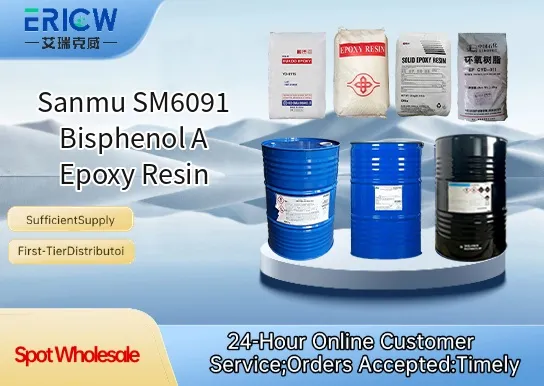
High purity bisphenol A-based epoxy resin with consistent molecular weight distribution.
Excellent thermal stability and low volatility, suitable for high-temperature curing processes.
Superior adhesion to metals, composites, and cured polymer substrates.
Low ionic chloride content (< 500 ppm), minimizing corrosion risk in electronic encapsulation.
Good solubility in common reactive diluents and aromatic solvents for formulation flexibility.
Electrical insulation systems for motors, transformers, and generators.
Structural adhesives for aerospace and automotive composite bonding.
Prepregs and laminates in printed circuit board (PCB) manufacturing.
High-performance coatings for chemical-resistant industrial tank linings.
Encapsulants and potting compounds for power electronics and LED modules.
| Chemical Type | Bisphenol A diglycidyl ether (DGEBA) epoxy resin |
| Product Form | Amber to light yellow viscous liquid |
| Appearance | Clear, transparent, free from gels or suspended particles |
| Epoxy Equivalent Weight (EEW) | 185–192 g/eq |
| Viscosity (25°C) | 12,000–15,000 mPa·s |
| Chlorine Content (Total) | ≤ 800 ppm |
| Softening Point | 12–15°C |
| Volatiles (150°C, 2 h) | ≤ 0.3 wt% |
Q1: What are the primary curing agents compatible with Sanmu SM6091?
A: Sanmu SM6091 is compatible with common amine-based hardeners (e.g., aliphatic, cycloaliphatic, and aromatic amines), anhydrides, and phenolic resins. Selection depends on desired cure speed, glass transition temperature, and end-use performance requirements.
Q2: Is Sanmu SM6091 suitable for high-performance composite applications?
A: Yes — its balanced molecular weight distribution and low chloride content support excellent mechanical strength, adhesion, and thermal stability in fiber-reinforced composites, especially where dimensional stability and chemical resistance are critical.
Q3: How does SM6091 compare to standard liquid DGEBA resins in terms of viscosity and handling?
A: SM6091 exhibits moderate viscosity at room temperature, offering improved processability over higher-molecular-weight solid epoxies while maintaining better film-forming ability and reduced volatility compared to very low-viscosity DGEBA grades.
Q4: Can SM6091 be used in coatings requiring FDA-compliant food-contact performance?
A: Sanmu SM6091 is designed for industrial and protective coating applications. For food-contact use, final formulation compliance must be verified through full system testing and regulatory review — the base resin alone does not constitute regulatory approval.
Contact With Us:
E-mail: wangxingqiang@ericwchem.com
Have a Questions? Call Us:
Add:
Building A1, Jiete Industrial Park, Huangpu District, Guangzhou City, Guangdong Province, China