English
 Español
 tiếng việt
 русский
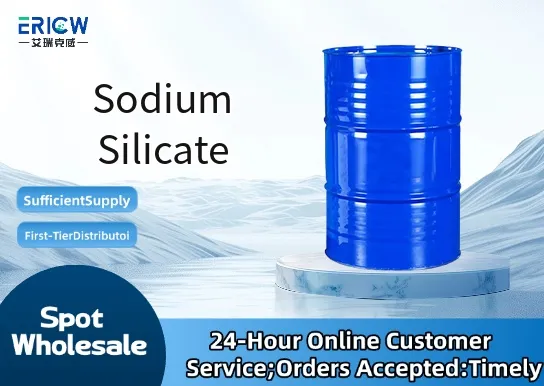
Highly alkaline aqueous solution with excellent binding and adhesive properties.
Non-toxic, water-soluble, and biodegradable under standard environmental conditions.
Acts as an effective corrosion inhibitor for ferrous metals in closed-loop cooling systems.
Provides rapid setting control and enhanced green strength in foundry sand binders.
Stable across a broad pH range (11.5–13.0) and compatible with many inorganic additives.
Foundry core and mold binder in silica sand systems for metal casting.
Set accelerator and densifier in geopolymer cements and alkali-activated materials.
Waterglass-based sealants for concrete and masonry surface hardening.
Stabilizer and coagulant aid in detergent and laundry additive formulations.
Base component in fire-resistant coatings and intumescent formulations.
| Chemical Type | Sodium metasilicate pentahydrate (Na₂SiO₃·5H₂O) and sodium silicate solution (waterglass), typical modulus (SiO₂:Na₂O) = 2.0–3.3 |
| Product Form | Clear to pale yellow viscous liquid (solution) or white crystalline solid (anhydrous or hydrated) |
| Appearance | Colorless to light amber transparent liquid; odorless |
| pH (1% aqueous solution) | 11.8–12.6 at 25°C |
| Density (25°C) | 1.37–1.45 g/cm³ (for 39–41% w/w SiO₂ solution) |
| Solubility | Completely miscible with water; insoluble in organic solvents |
| Regulatory Compliance | REACH registered; compliant with FDA 21 CFR §184.1784 (GRAS for food contact applications as processing aid) |
| Storage Stability | Stable ≥12 months in sealed containers at 15–25°C; avoid freezing and prolonged CO₂ exposure |
| Common Compatible Systems | Suitability |
| Silica sand (foundry molding) | Highly Recommended – Forms thermally stable siloxane bonds upon drying and curing |
| Alkali-activated fly ash/slag systems | Highly Recommended – Primary activator enabling geopolymerization |
| Calcium hydroxide (lime) suspensions | Recommended – Reacts to form calcium silicate hydrates (CSH), enhancing strength |
| Acrylic emulsion coatings | Suitable – Limited compatibility; requires pH buffering and careful formulation to prevent coagulation |
| Polyvinyl alcohol (PVA) solutions | Suitable – Can be blended for hybrid binder systems with improved film integrity |
Q1: What is the CAS Number for common sodium silicate solutions?
A: The CAS Registry Number for sodium metasilicate pentahydrate is 10213-79-3; for generic aqueous sodium silicate (waterglass), CAS 1344-09-8 applies to the mixture category.
Q2: How much sodium silicate should be used in foundry sand molding?
A: Typical addition rate ranges from 2.0–4.5 wt% based on dry sand weight; optimal dosage depends on sand grain size, moisture content, and required green compression strength—validation via lab-scale testing is recommended.
Q3: How does sodium silicate compare to sodium hydroxide in geopolymer activation?
A: Sodium silicate supplies both alkalinity (Na₂O) and soluble silica (SiO₂), enabling faster reaction kinetics and higher early strength versus NaOH alone; it also reduces efflorescence risk and improves matrix homogeneity.
Q4: Is sodium silicate approved for indirect food contact applications?
A: Yes—aqueous sodium silicate meets FDA 21 CFR §184.1784 as Generally Recognized As Safe (GRAS) for use as a processing aid, defoamer, or binder in food packaging adhesives and food-grade equipment cleaners.
Q5: Can sodium silicate migrate from treated concrete into potable water systems?
A: When properly cured and rinsed, leaching is negligible; NSF/ANSI Standard 61-certified sodium silicate formulations show <0.1 mg/L SiO₂ release after 7-day immersion, well below regulatory thresholds for drinking water components.
Contact With Us:
E-mail: wangxingqiang@ericwchem.com
Have a Questions? Call Us:
Add:
Building A1, Jiete Industrial Park, Huangpu District, Guangzhou City, Guangdong Province, China