English
 Español
 tiếng việt
 русский
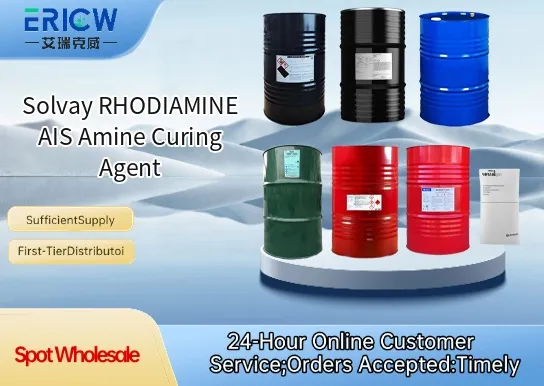
Highly reactive aliphatic amine curing agent designed for fast ambient- and elevated-temperature cure of epoxy resins.
Excellent chemical resistance post-cure, particularly against solvents, acids, and alkalis.
Low viscosity enables easy handling, precise metering, and superior wetting of fillers and reinforcements.
Low volatility and reduced skin sensitization potential compared to conventional DETA-based amines.
Enables high glass transition temperature (Tg) and mechanical strength in cured epoxy systems.
Structural adhesives for aerospace and automotive bonding.
High-performance composite matrices in wind turbine blades and sporting goods.
Electrical encapsulants and potting compounds requiring thermal stability and dielectric integrity.
Industrial flooring and protective coatings for aggressive chemical environments.
Tooling and mold-making resins demanding dimensional stability and low exotherm.
| Chemical Type | Aliphatic polyamine |
| Product Form | Liquid |
| Appearance | Pale yellow to amber clear liquid |
| Amine Value | 380–420 mg KOH/g |
| Viscosity (25°C) | 80–120 mPa·s |
| Density (20°C) | 0.92–0.96 g/cm³ |
| Primary Applications | Epoxy resin curing for structural composites, adhesives, and coatings |
| Key Features | Fast cure, low volatility, high Tg capability, excellent chemical resistance |
Q1: What is the primary function of RHODIAMINE AIS in epoxy systems?
A: RHODIAMINE AIS is a specialty amine-based curing agent designed to provide rapid ambient-temperature cure and enhanced chemical resistance in formulated epoxy resins, particularly where low viscosity, extended pot life, and good adhesion to challenging substrates are required.
Q2: Is RHODIAMINE AIS suitable for food-contact or potable water applications?
A: RHODIAMINE AIS is not pre-qualified for direct food-contact or potable water applications. Its suitability for such uses depends on full formulation evaluation—including final cured system testing—and compliance with applicable regional regulatory frameworks. End users must conduct appropriate migration and safety assessments.
Q3: How does RHODIAMINE AIS compare to conventional aliphatic amines in terms of handling and reactivity?
A: Compared to many standard aliphatic amines, RHODIAMINE AIS offers lower volatility, reduced odor, and improved compatibility with epoxy resins—contributing to safer handling and more consistent processing. Its reactivity profile supports balanced cure speed and workability without requiring elevated temperatures.
Q4: What types of epoxy resins is RHODIAMINE AIS typically compatible with?
A: RHODIAMINE AIS demonstrates broad compatibility with liquid and solid bisphenol-A and bisphenol-F based epoxy resins, as well as many novolac and cycloaliphatic epoxies. Optimal performance is achieved when matched with resins having appropriate epoxy equivalent weight and viscosity for the target application.
Q5: What guidance can Solvay provide on recommended dosage levels?
A: Dosage is formulation-dependent and should be optimized based on desired cure profile, mechanical properties, and service conditions. RHODIAMINE AIS is typically used at low concentrations relative to resin weight, and the active hydrogen equivalent ratio should be carefully adjusted during development to ensure full crosslinking.
Contact With Us:
E-mail: wangxingqiang@ericwchem.com
Have a Questions? Call Us:
Add:
Building A1, Jiete Industrial Park, Huangpu District, Guangzhou City, Guangdong Province, China